
Yinshanlan Garden
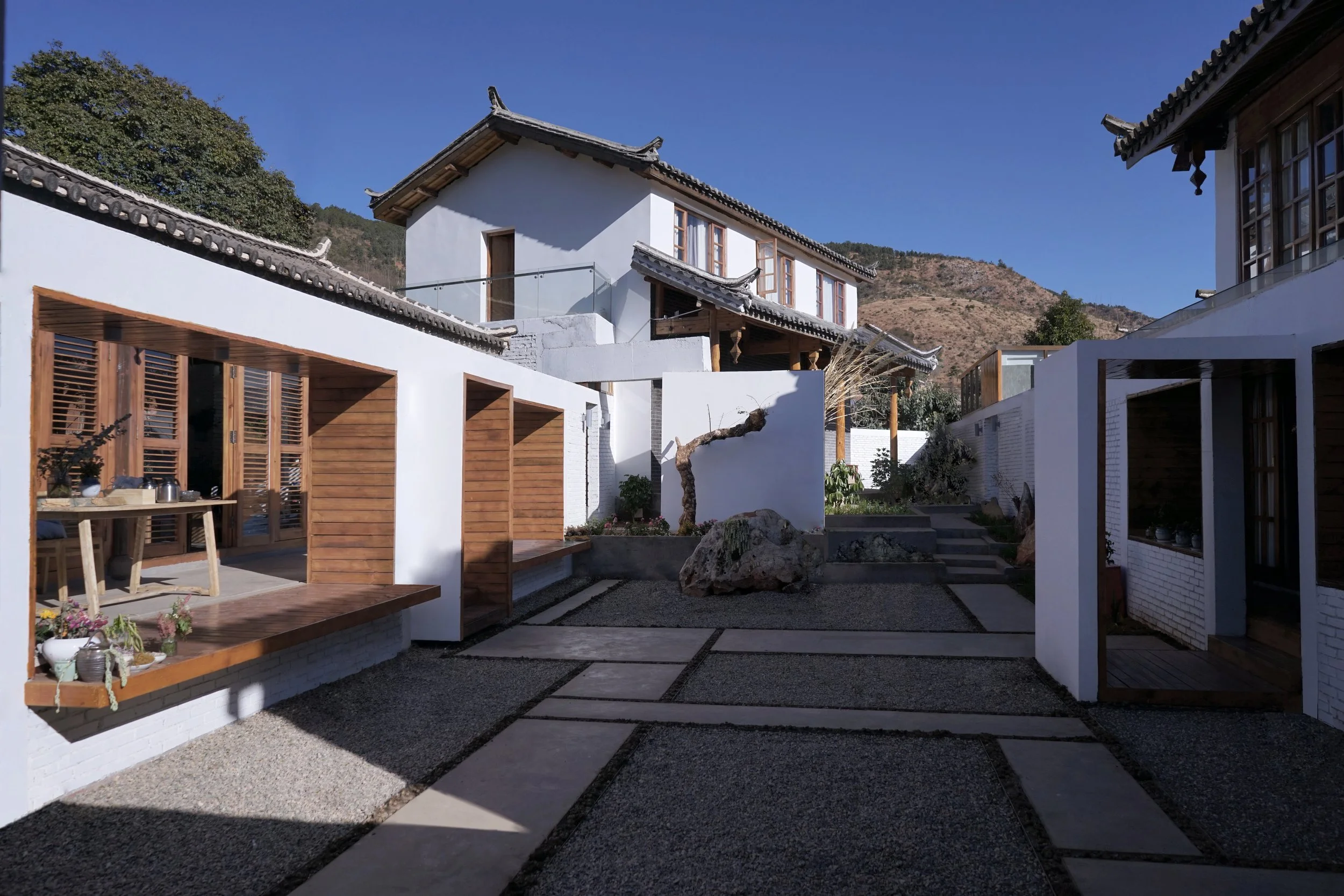
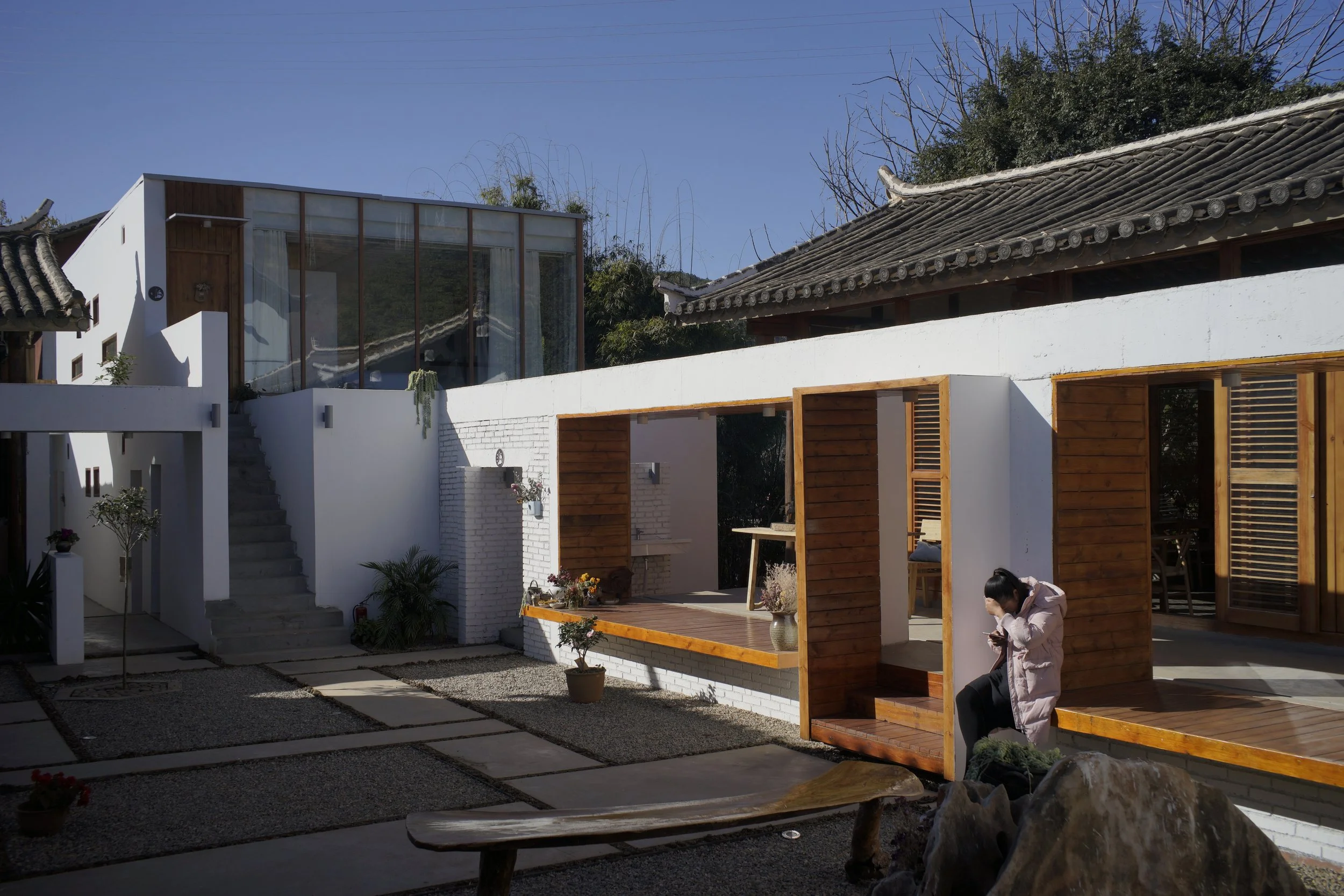
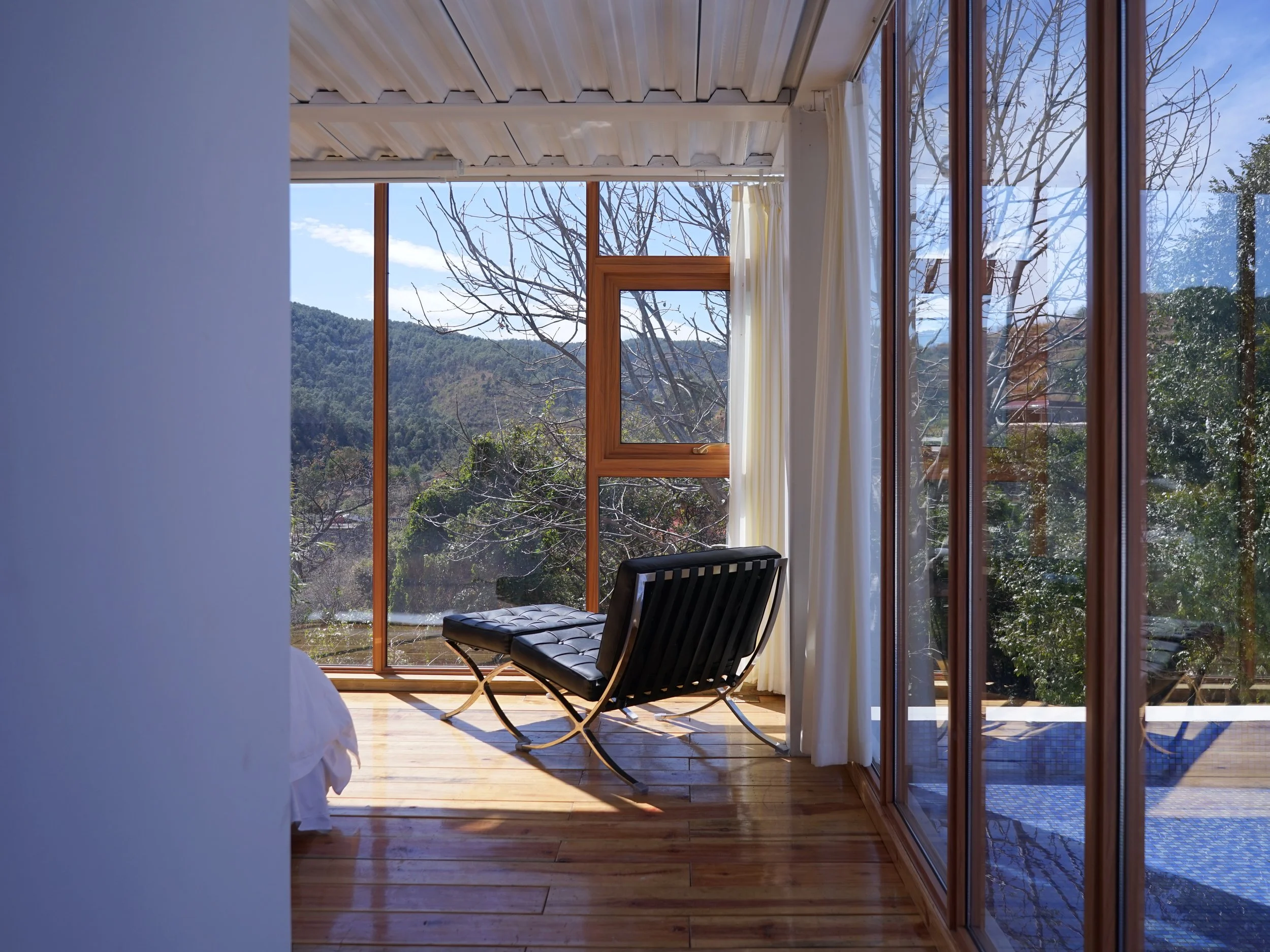
Yinshanlan Garden is located in Yishala Yi ethnic Village in Panzhihua, Sichuan. Commissioned in 2018, the project transforms a family compound into a guesthouse, while exploring a sustainable approach to rural renovation under limited resources.
The site consists of six buildings constructed in different periods, using various materials and structural systems—from rammed earth and timber to brick-concrete and improvised steel structures. Rather than a unified ensemble, the compound was fragmented, both spatially and architecturally. The central challenge was to create a coherent spatial experience without erasing the diversity embedded in the existing buildings.
Instead of treating each building individually, the design shifts its focus beyond the buildings themselves. After structural assessment and selective removal of unsafe elements, the original structures were largely preserved. A new strategy was introduced: inserting a “void room” into the courtyard.
This white, abstract volume acts as a mediator between the existing buildings. It does not replicate traditional forms, but establishes a continuous spatial interface that connects the fragmented compound into a unified experience. Through this insertion, relationships between old buildings are redefined, and new functions emerge.
The intervention minimizes demolition and reconstruction, reducing cost while maintaining the memory and material diversity of the site. At the same time, the inserted volume creates new circulation paths, thresholds, and shared spaces, allowing the compound to operate as a contemporary guesthouse.
The transformation is not about formal consistency, but about spatial continuity.
Within the preserved structures, different programs are distributed according to their spatial potential. Existing buildings are adapted into guest rooms, while new structures provide panoramic rooms and shared facilities. A former unused attic space is converted into the owner’s private suite, connected by a newly inserted stair that emerges from the “void room.”
The project adopts a pragmatic construction approach rooted in local conditions. Instead of pursuing refined detailing, it embraces a low-precision building logic. Simple materials and direct construction methods are used: exposed brick walls, visible steel beams, and floor decks become part of the architectural expression.
This approach is both a constraint and a conscious choice. By accepting the realities of rural construction—limited budget, local labor, and available materials—the project develops its own aesthetic language based on construction itself.
Construction was carried out by local builders using locally sourced materials, combined with minimal industrial components. In this process, architecture becomes a collaborative act embedded within the village context.
Yinshanlan Garden is not merely a renovation project. It is an experiment in how architecture can operate within rural conditions—preserving differences, inserting new spatial logic, and allowing old and new to coexist without hierarchy.
Location Panzhihua city, Sichuan Province
Area 780㎡
Genre Guesthouse