
Wildlife Observation Tower
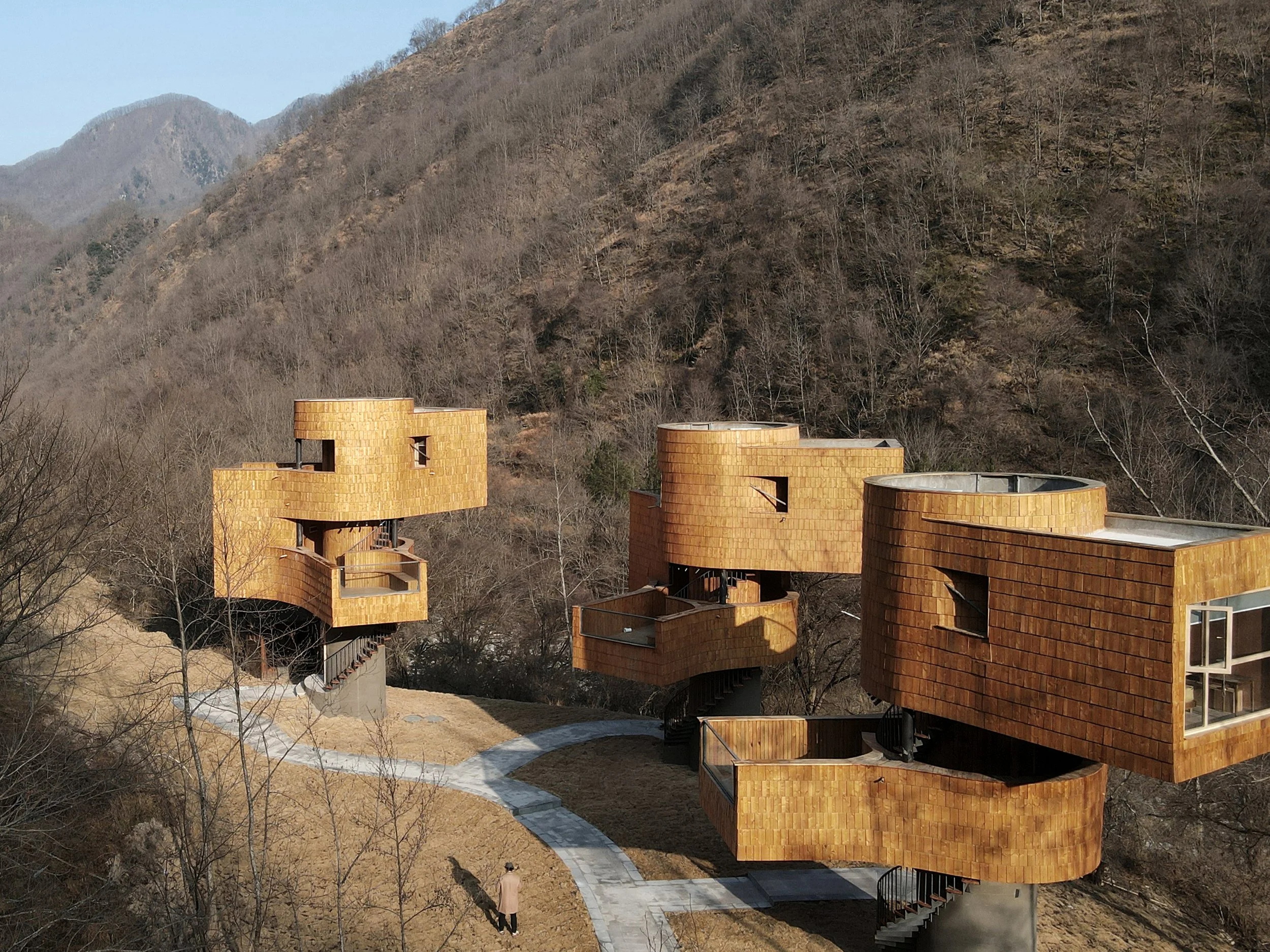
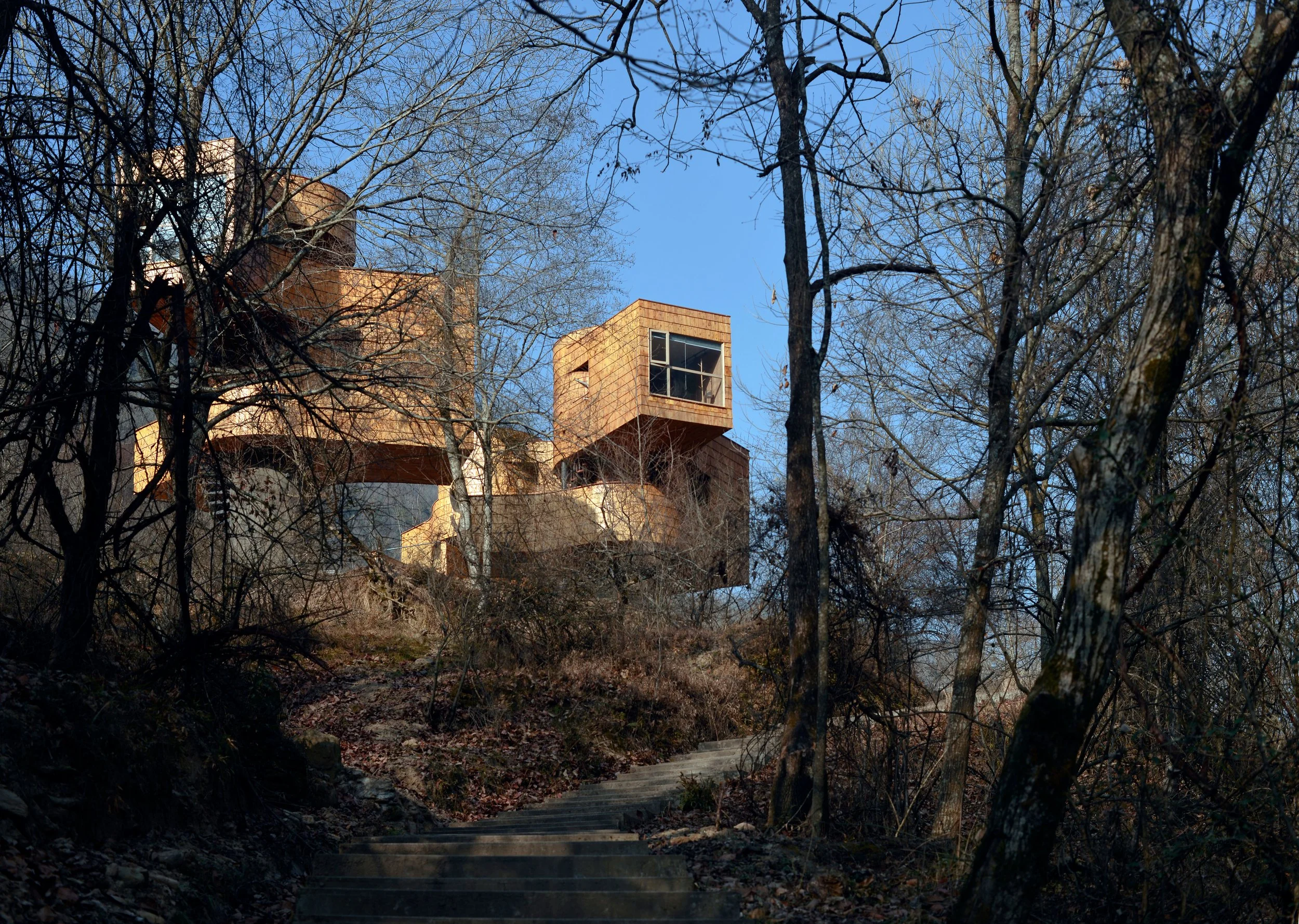
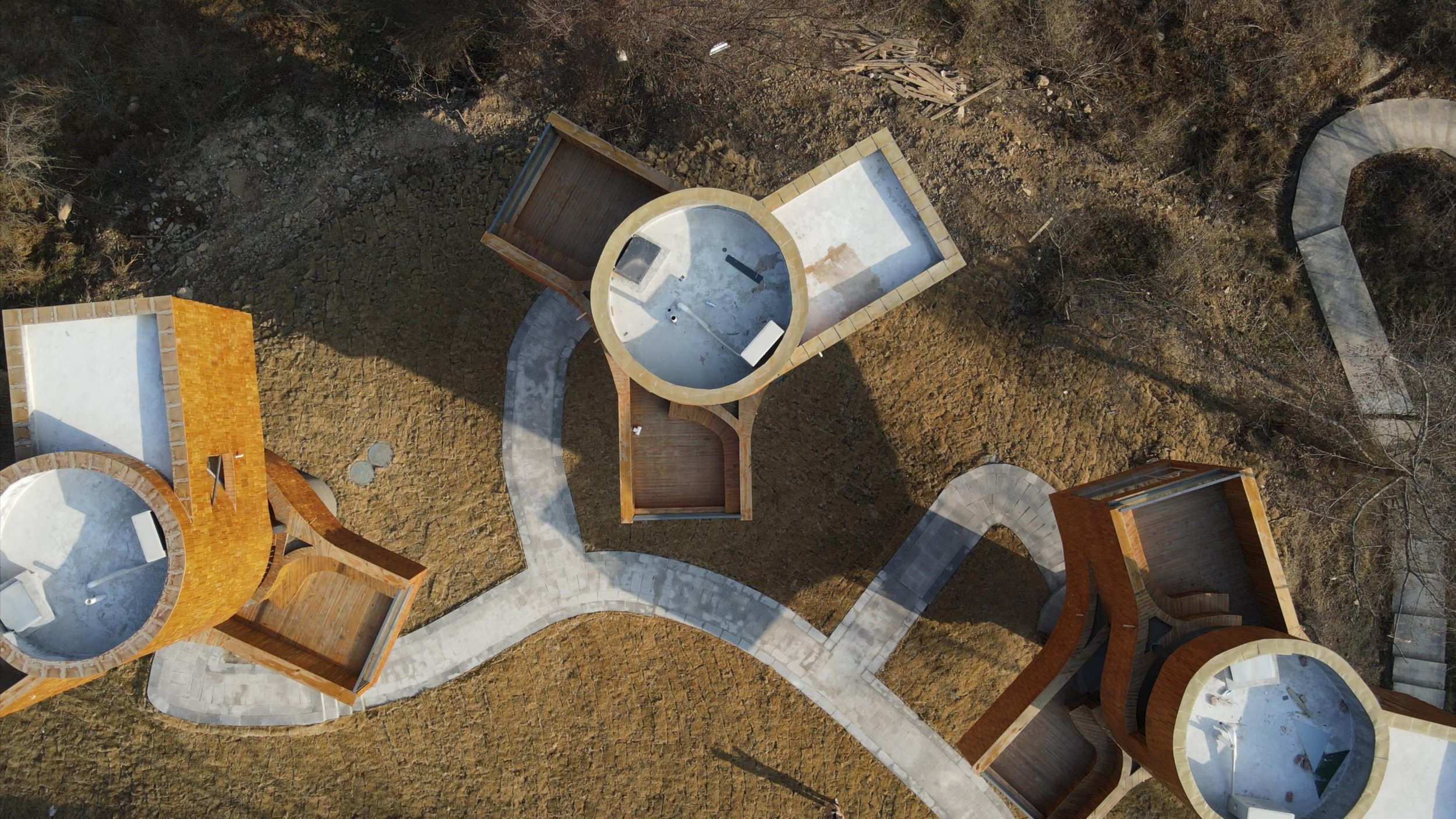
Commissioned in 2021 by the Tangjiahe National Nature Reserve, the Wildlife Observation Tower is located deep within the protected habitat. The project begins with a simple intention: to touch nature as lightly as possible.Tangjiahe is widely known as a habitat for giant pandas, but it is also home to a diverse range of rare and endangered species, including takin, golden snub-nosed monkeys, clouded leopards, and green-tailed pheasants. The site lies directly along a seasonal migration corridor of the takin, particularly active during the mating season, making it an ideal location for long-term observation and research.
The building adopts a vertical strategy to minimize its footprint on the ground. By concentrating the program into a compact tower, the intervention reduces disturbance to the surrounding ecosystem while maintaining a clear observational advantage.The primary spaces are elevated to the second and third levels, providing expanded views into the forest. These upper levels accommodate both research and short-term living, with two bedrooms supporting small groups or families engaged in ecological study. Each room is paired with an independent observation platform, allowing human activity to remain separated from wildlife movement on the ground.
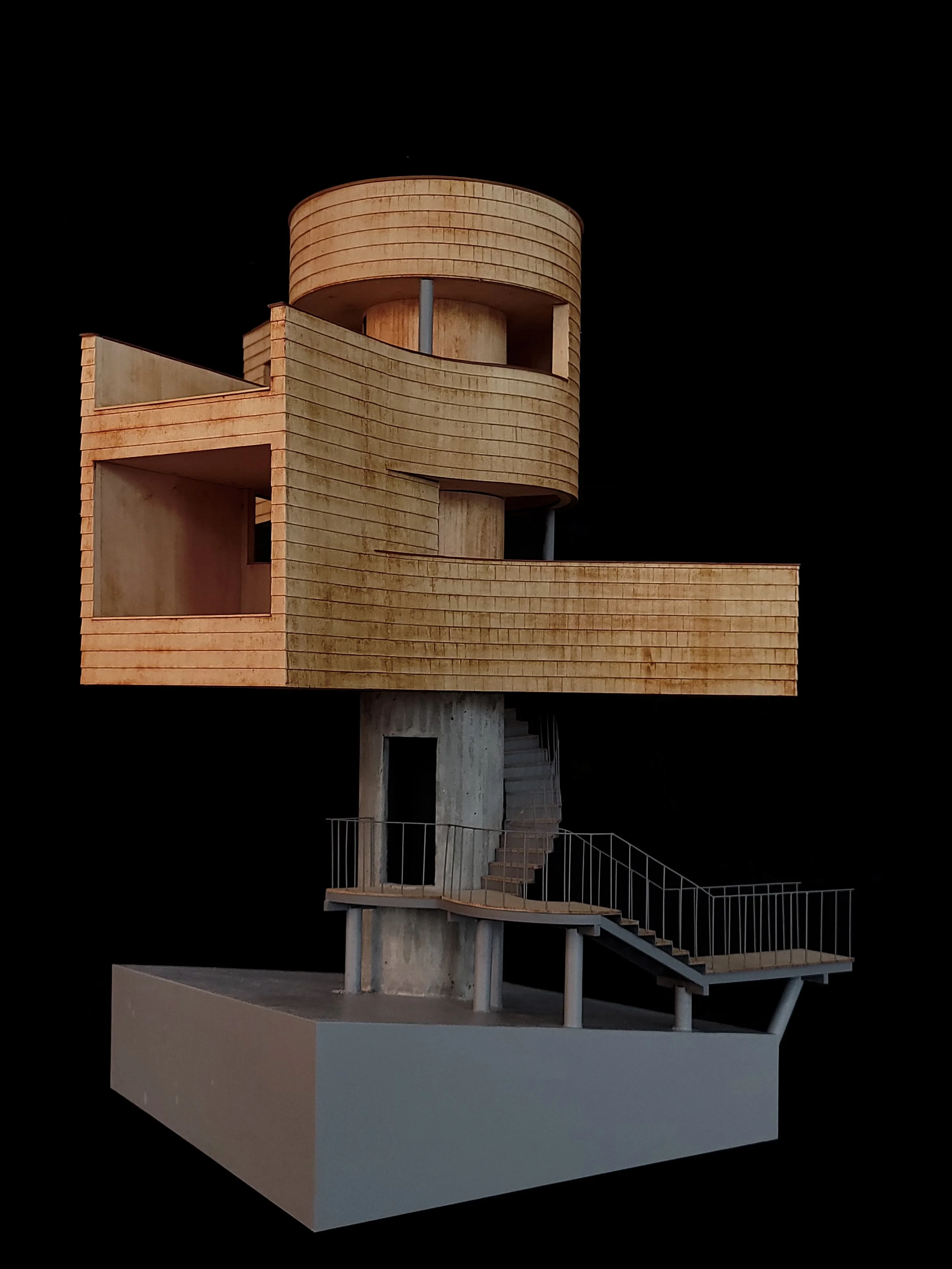
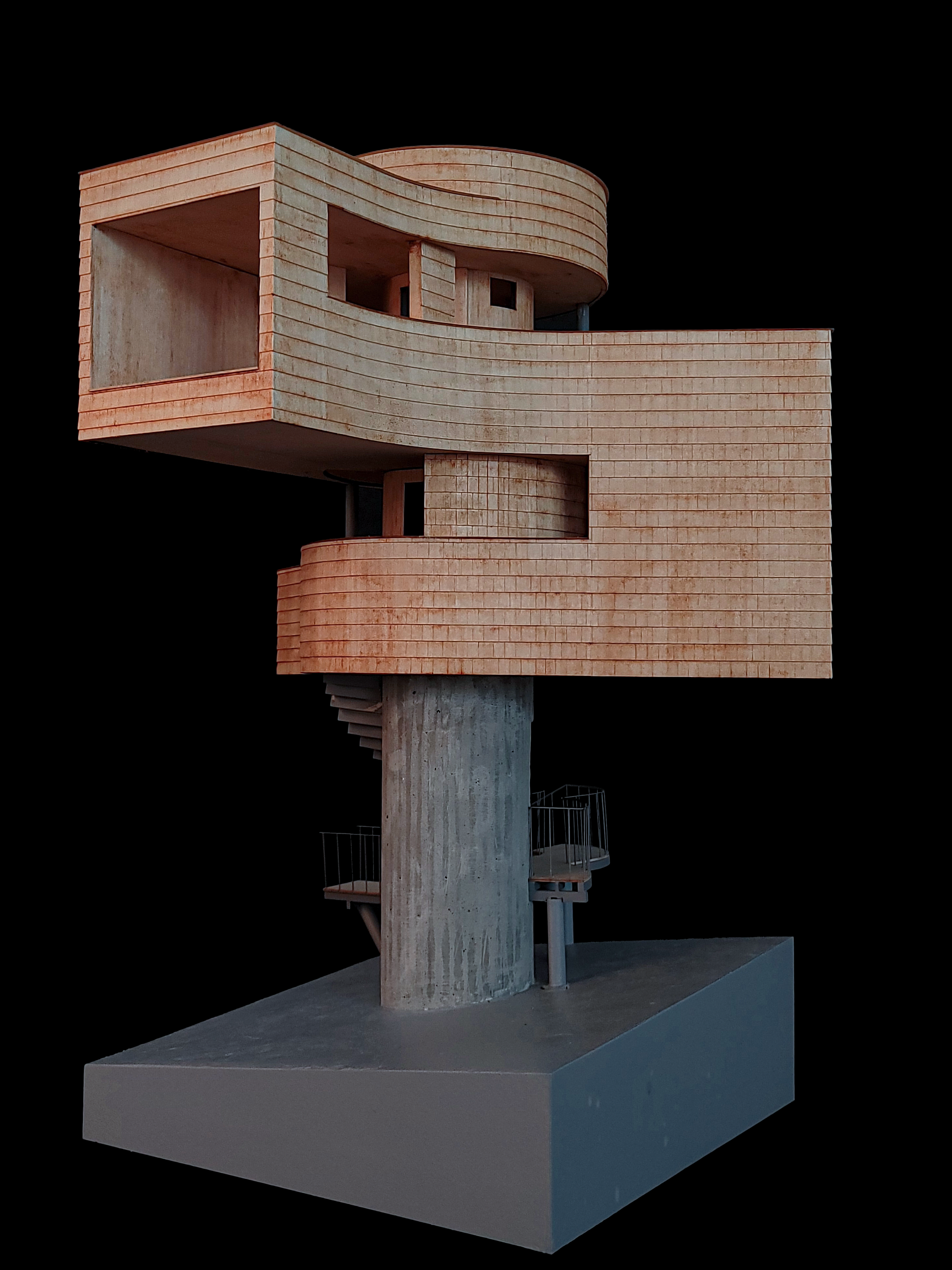
Structurally, the tower is organized around a concentric inner and outer core system. The inner core forms the main vertical structure, while functional rooms cantilever outward, reaching up to 5.2 meters. To maintain equilibrium, the plan remains symmetrically organized, even as spaces are staggered across levels. A hybrid structural system is employed: a concrete core at the base reduces the structural diameter, while upper levels transition to a lightweight steel system. Cantilevered volumes are stabilized through diagonal tension members, forming a truss-like relationship between upper and lower beams to minimize structural depth and weight. The building envelope follows a lightweight construction logic. Timber infill walls are integrated within a steel frame, while the exterior is clad with deeply charred wooden shingles, providing both passive waterproofing and a dark, subdued presence within the forest.
During the design process, a full-scale logic was tested through a detailed physical model, ensuring consistency between concept and construction.
The project is not only a scientific facility but also a platform for public engagement. Outside peak research seasons, the tower opens to visitors, offering an immersive experience of observing wildlife within their natural habitat. Rather than asserting itself as an object, the tower withdraws—allowing nature to remain primary, and architecture to exist as a quiet instrument of observation.
Location Guangyuan city, Sichuan Province
Area 193.5㎡
Genre observing tower