
Vertical Nature Tower
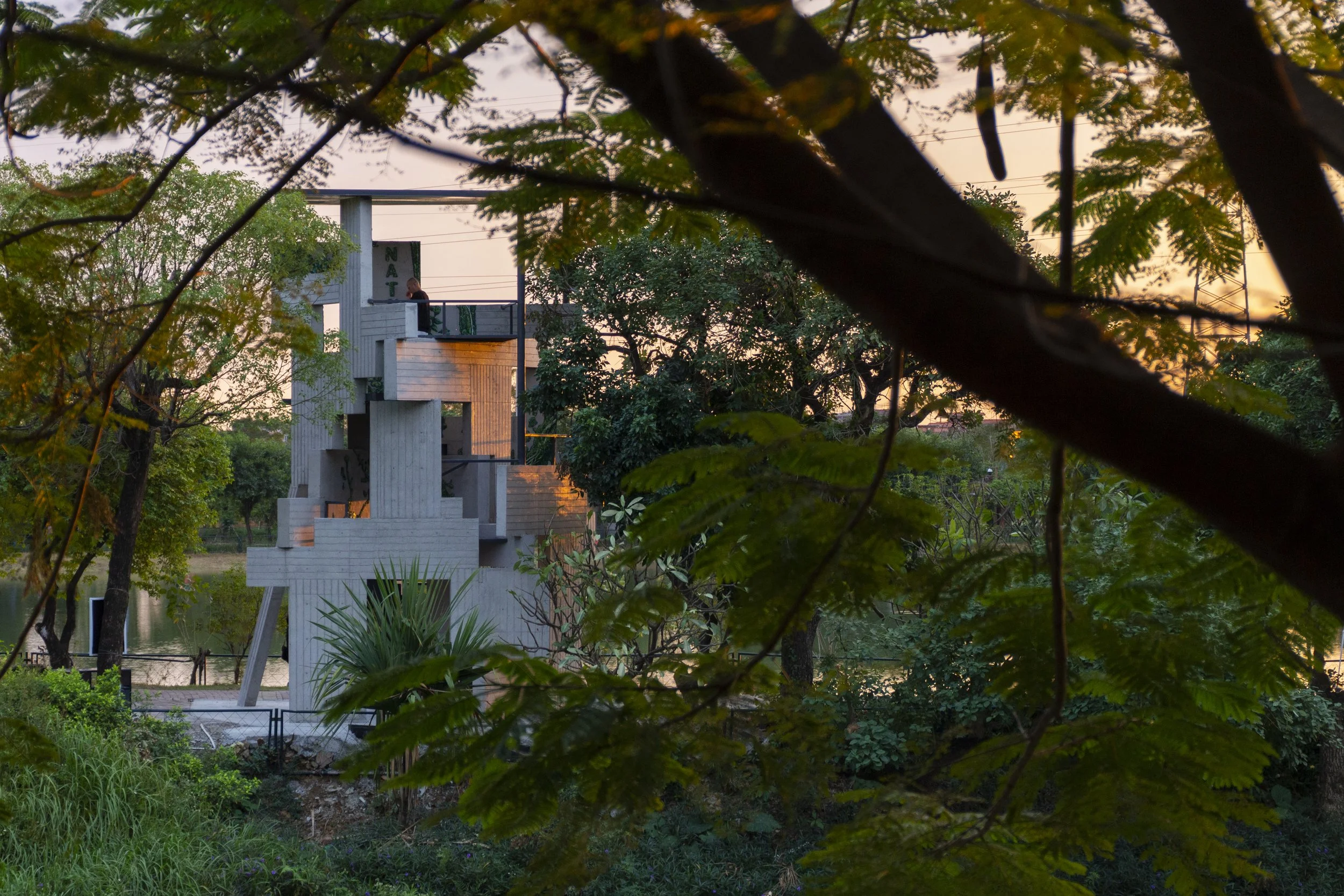
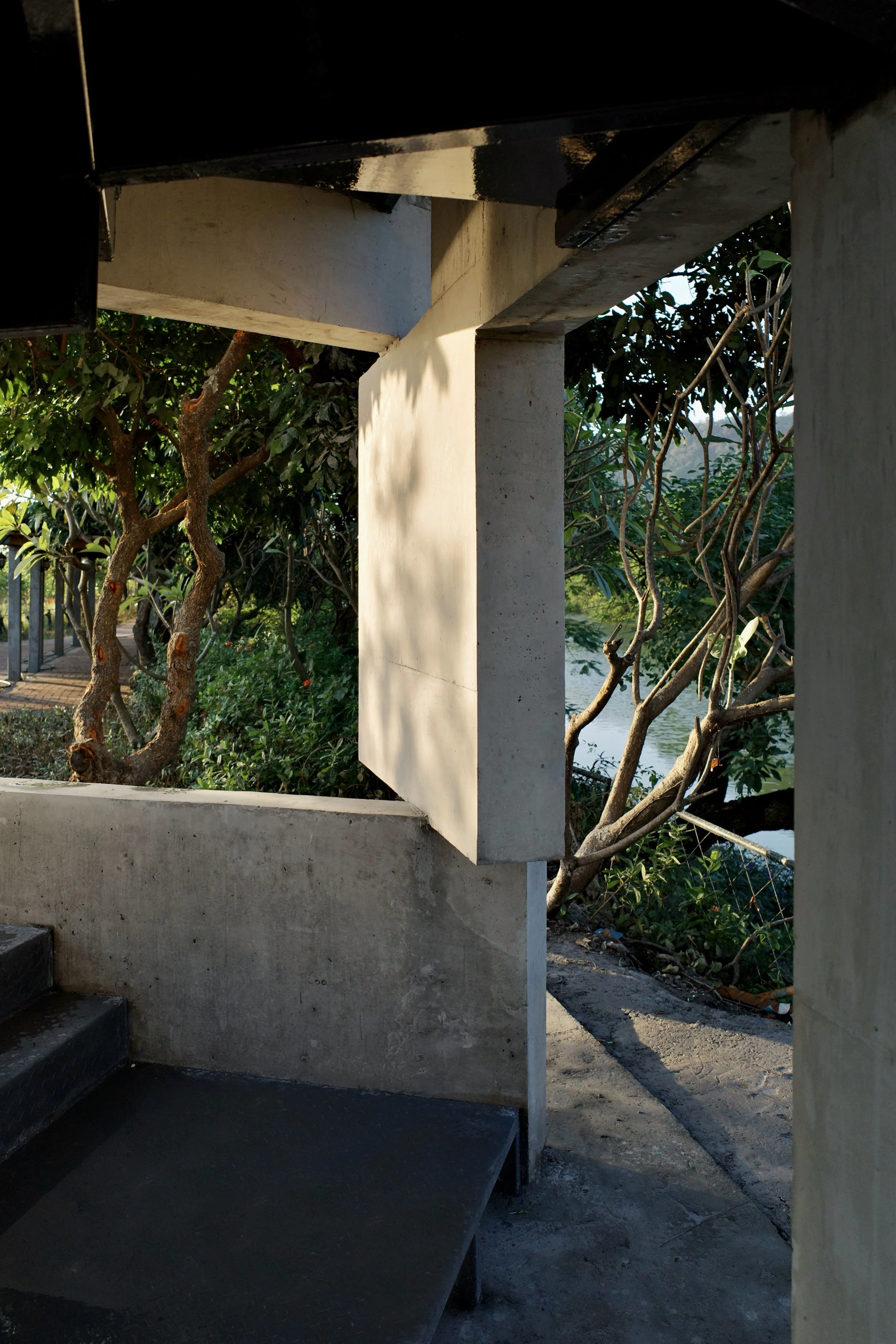
Vertical Nature Tower is a micro-museum designed for an art festival in Nanhai, Foshan. Situated beside a lake evolved from the traditional mulberry-dike fishpond system, the project responds to the ecological and cultural condition of southern China—where agriculture, water systems, and biological coexistence are deeply intertwined.
Rather than resisting nature, the project embraces the overwhelming vitality of the southern climate. In this context, architecture is not understood as a permanent and autonomous object, but as something inevitably absorbed, weathered, and transformed over time. The tower is conceived as a “future ruin”—a structure that anticipates its gradual integration into natural processes.
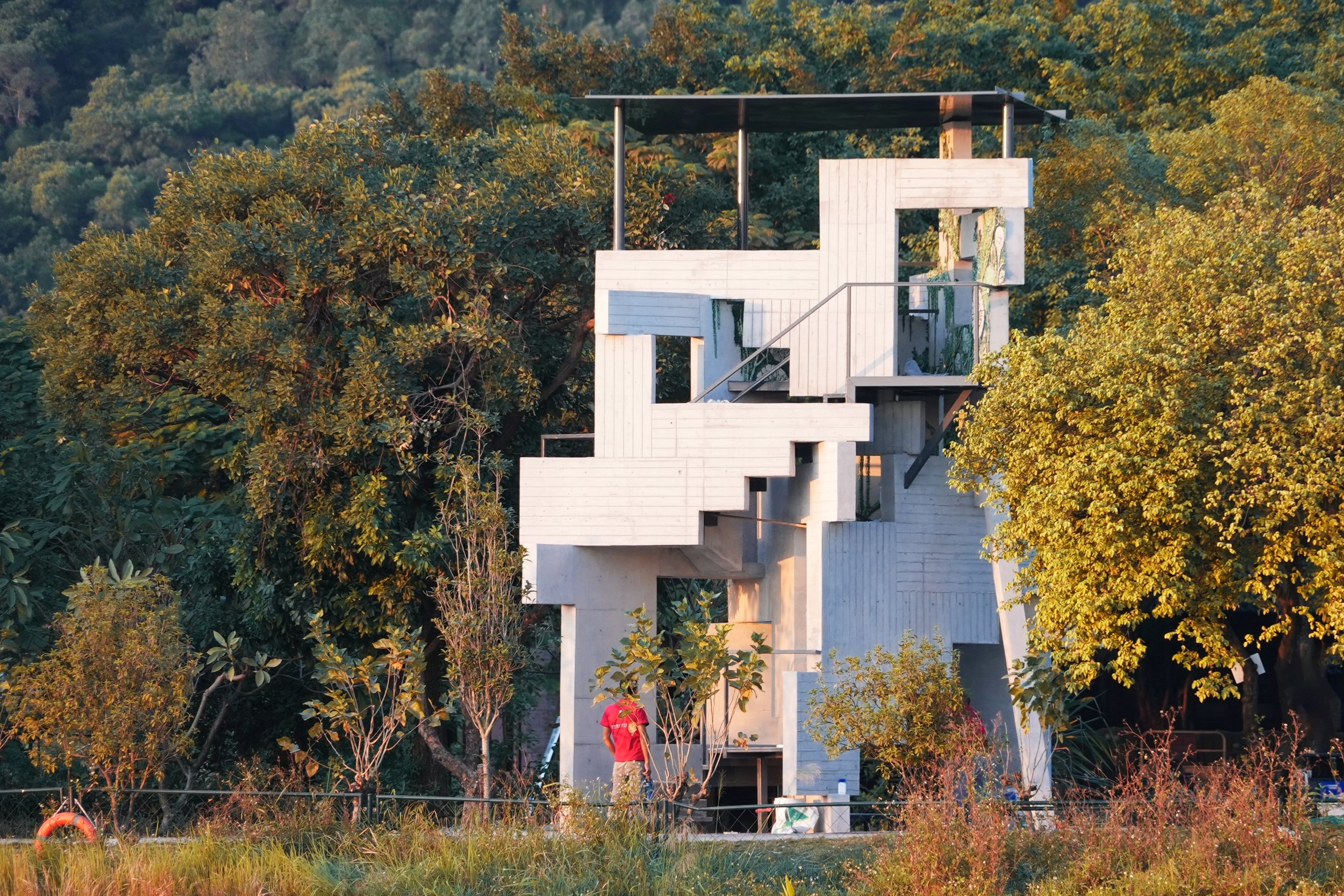
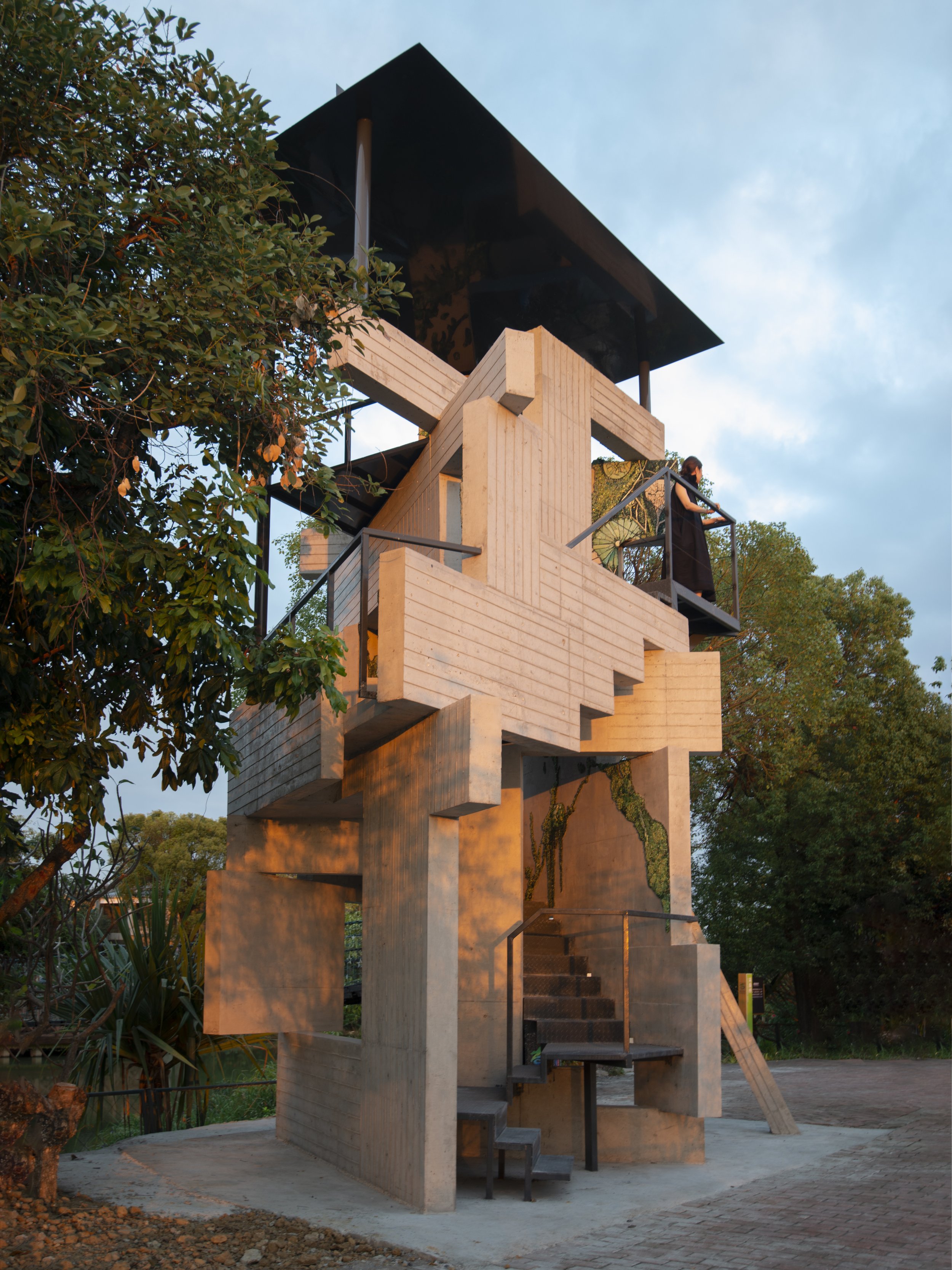
The building is formed by nine irregular cast-in-place concrete walls, loosely intersecting to define a vertical spatial system. Within this composition, a spiral path ascends through the gaps between walls, leading to a small pavilion at the top. The spatial experience is not enclosed but fragmented—continuously shifting between compression and openness, between interior and exterior.
Although the walls appear randomly overlapped, their construction required precise coordination. A concealed structural frame of beams and columns is embedded within the concrete, allowing the walls to maintain a visual language of instability while ensuring structural continuity. The project was constructed in multiple pours on site, reinforcing the sense of assembly through time rather than prefabrication.
Material expression plays a central role in the project’s relationship with nature. The outer surfaces of the walls are cast with grooved textures, creating footholds for future plant growth. Over time, vegetation is expected to colonize the structure, gradually softening its presence.
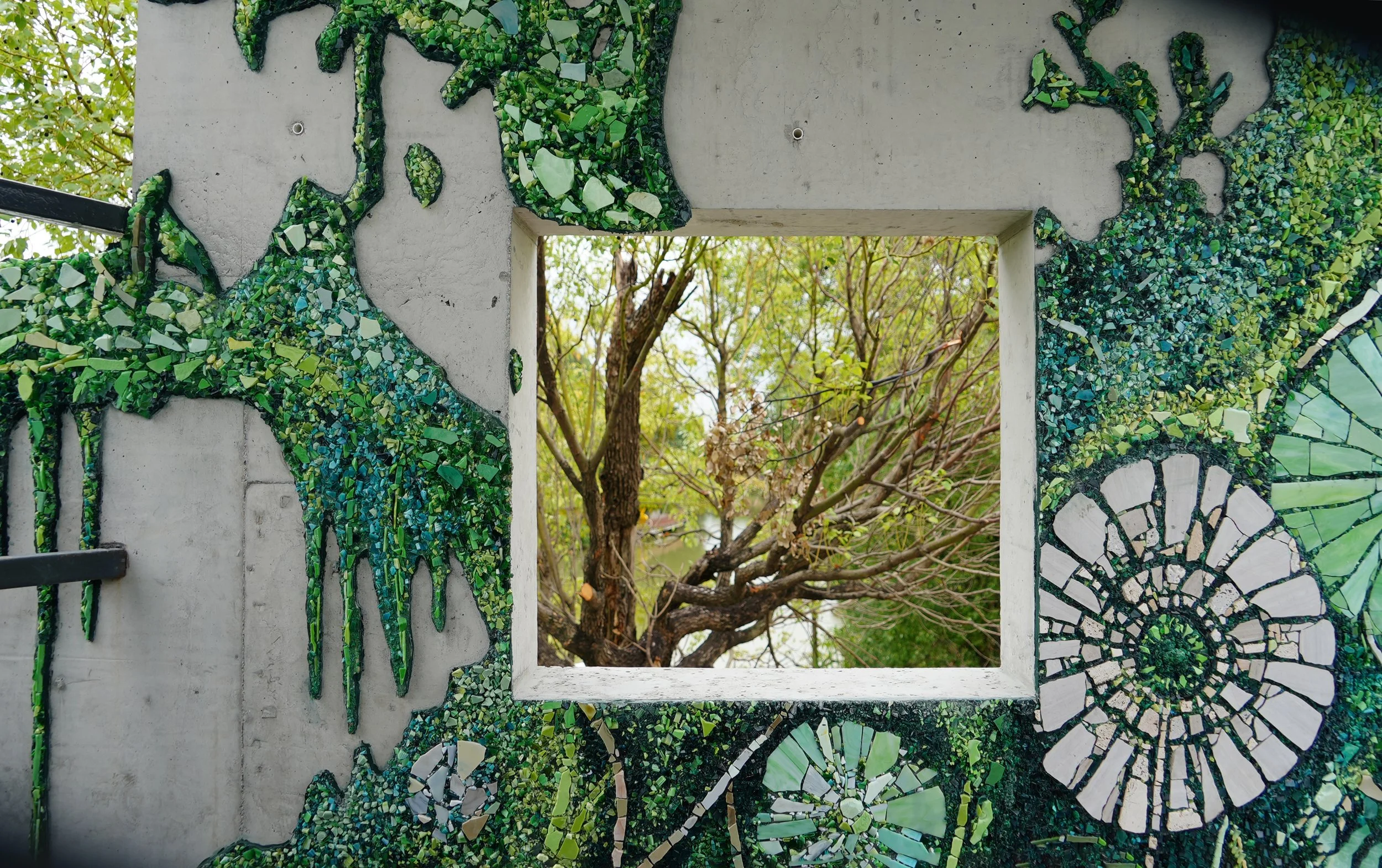
In contrast, the inner surfaces are smooth concrete, serving as a ground for artistic intervention. Green mosaic fragments are embedded across the walls, forming patterns that evoke moss—one of the most resilient and pervasive forms of life in humid southern environments. Through this technique, the artificial surface is reinterpreted as something organic: fragmented, growing, and continuously reconfigured.
The mosaic operates at two scales. At the micro level, it is composed of discrete units; at the macro level, it produces a diffuse and evolving field. This duality reflects a broader condition in which architecture, like nature, is formed through accumulation, erosion, and transformation.
Vertical Nature Tower is not a fixed object, but a process. It stages an encounter between concrete and vegetation, order and randomness, permanence and decay. Over time, the boundary between architecture and nature will blur—until the tower becomes indistinguishable from the environment it inhabits.
Location Foshan city, Guangdong Province
Area 50㎡
Genre landscape architecture