Vegetable Market of Lianhe village
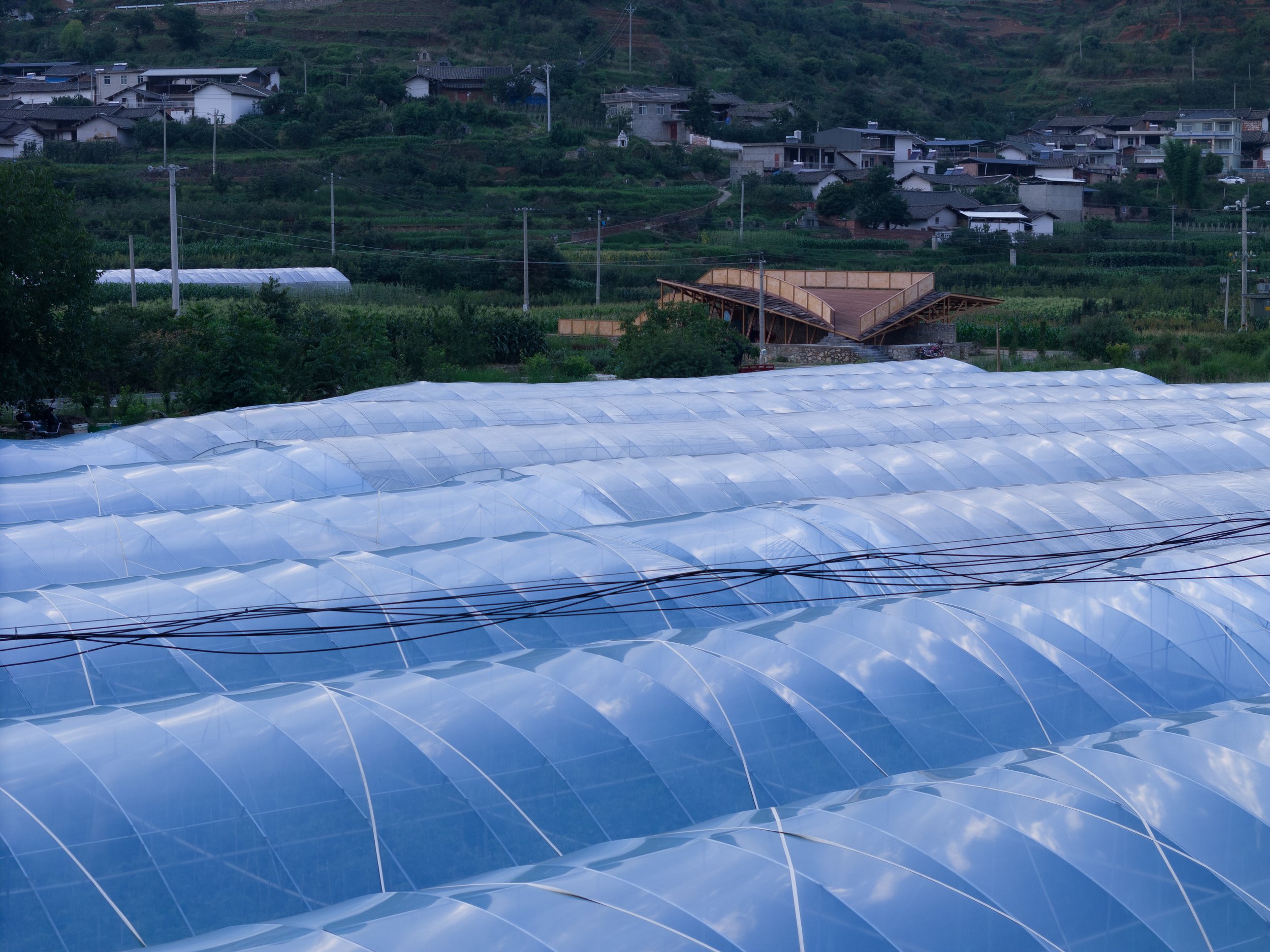
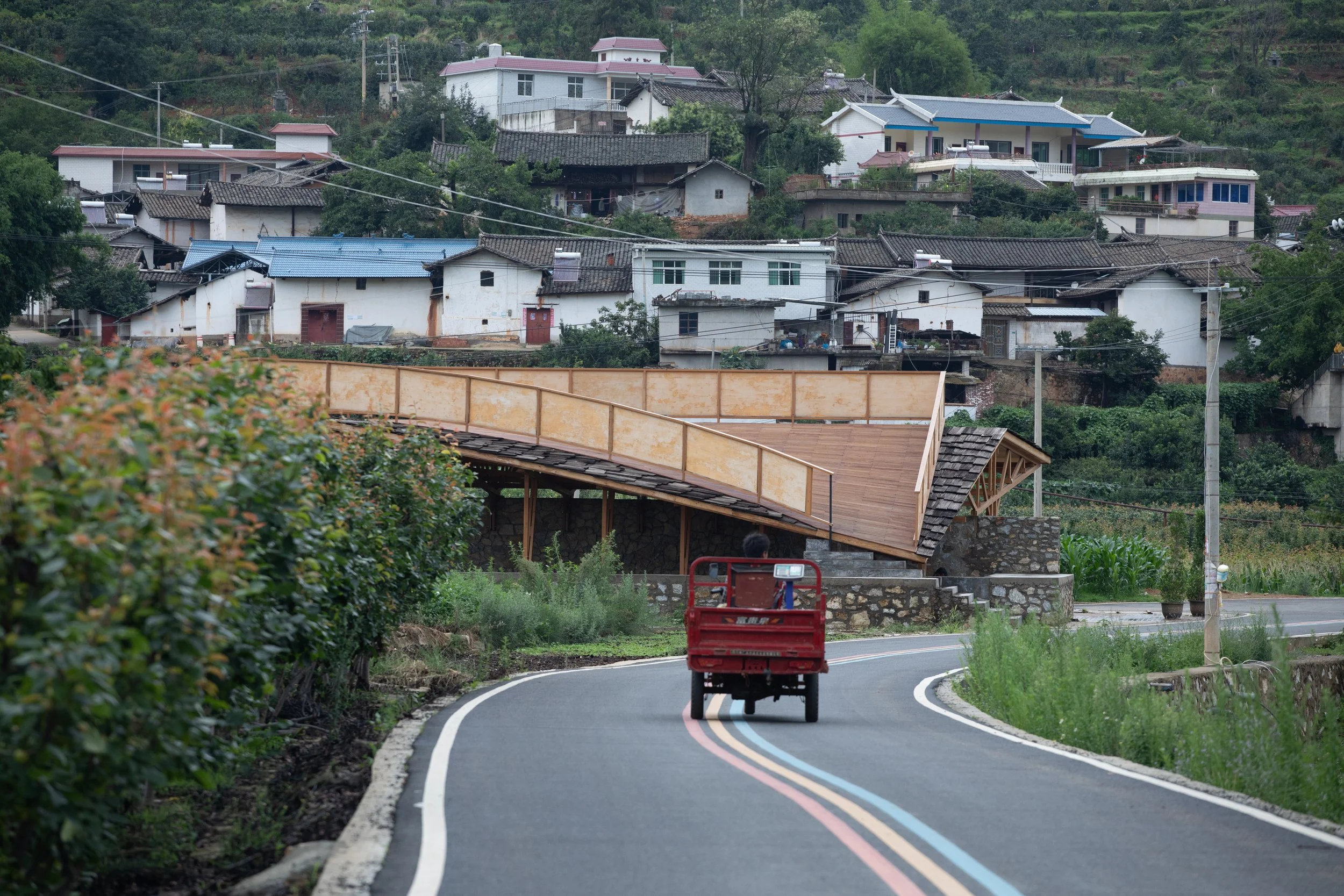
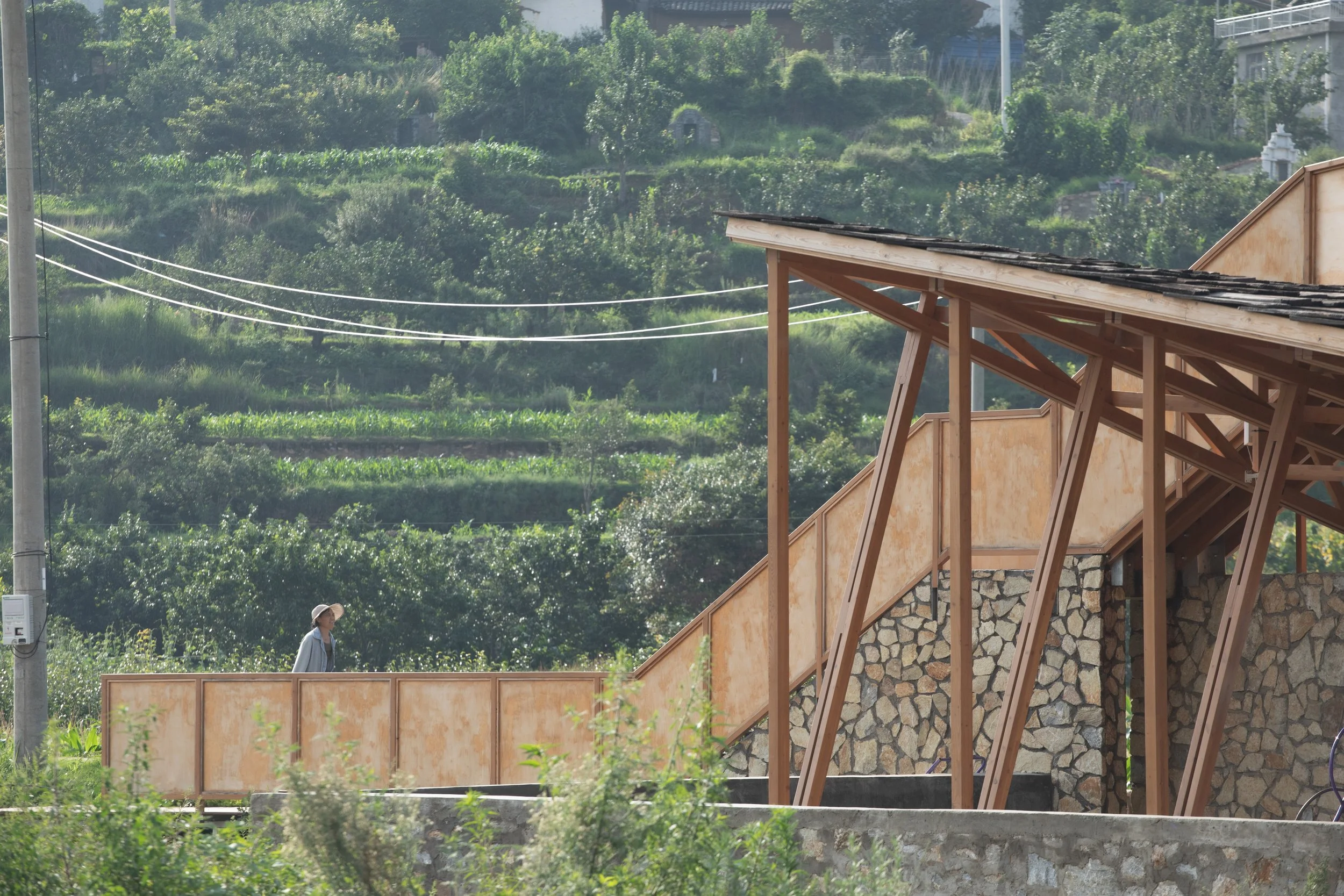
Located at the entrance of Lianhe Village, the Vegetable Market sits within farmland alongside a rural road. Benefiting from its favorable geographic conditions, the village produces high-quality fruits and vegetables, attracting a constant flow of produce traders. The project provides an open marketplace for these activities, forming a new interface between agriculture and exchange.
Rather than defining a conventional enclosed building, the market is conceived as a structure without a fixed climatic boundary. It is an open system that allows air, light, and people to move freely through it, responding directly to the rhythms of rural life.
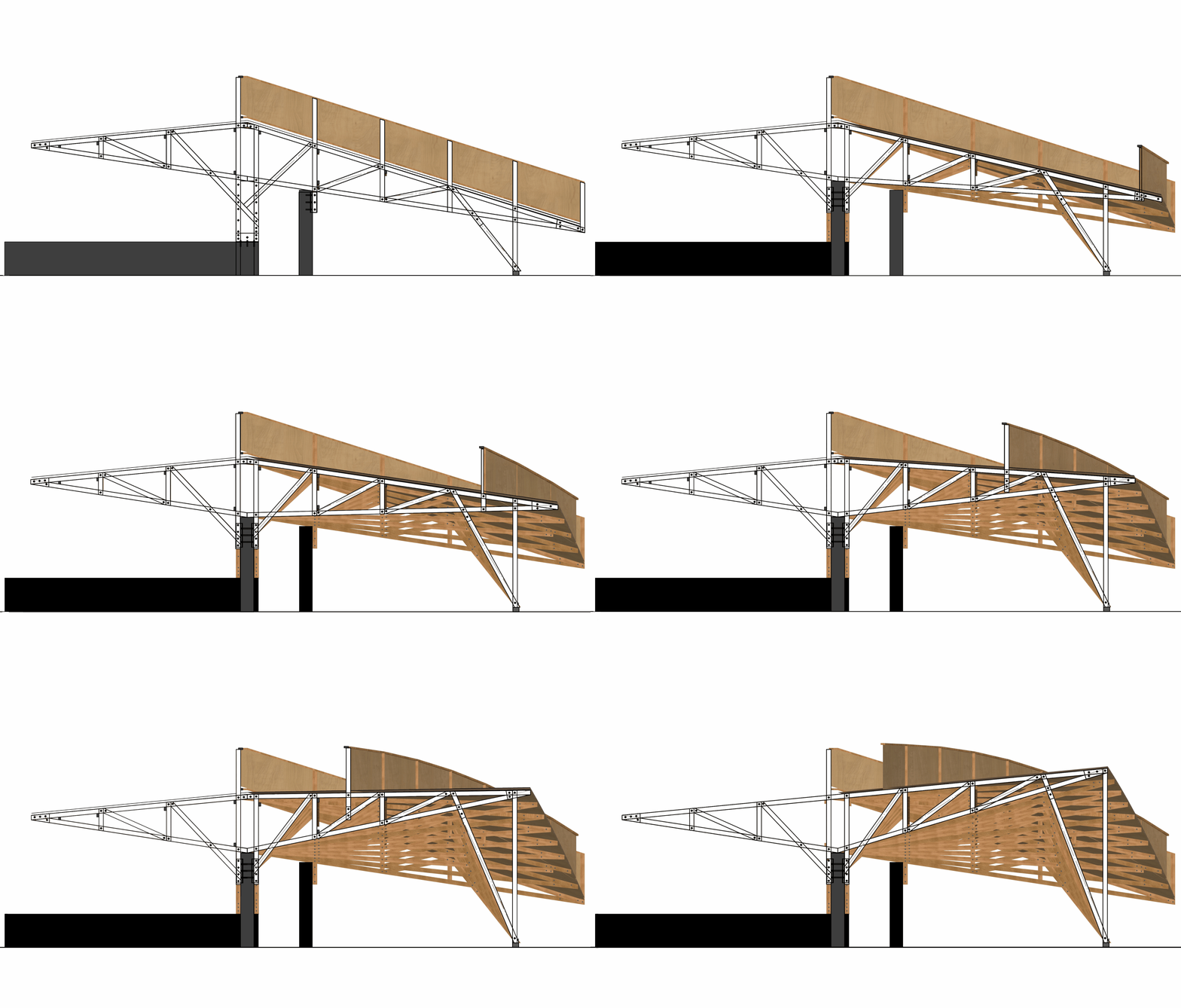
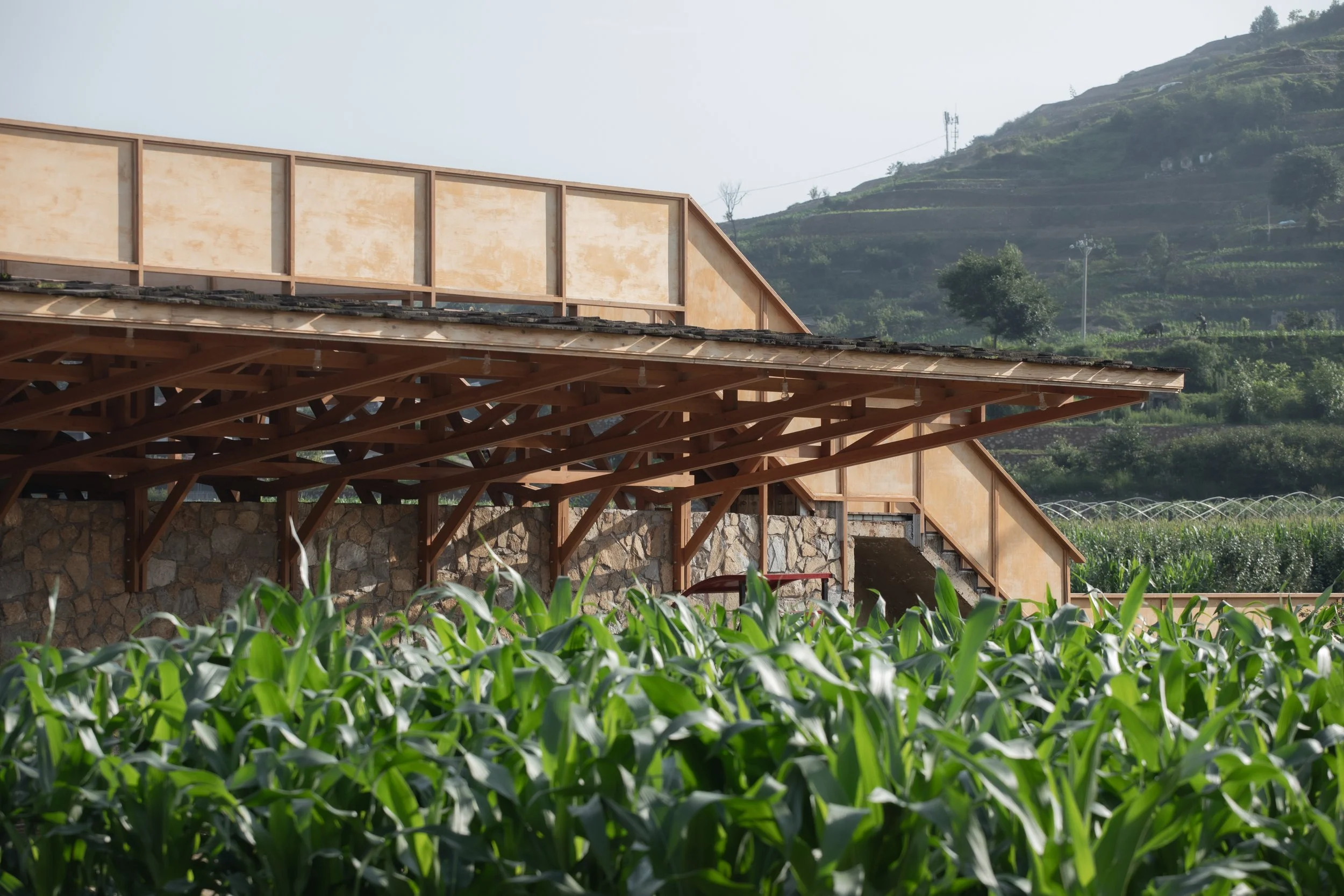
The architecture is composed of a series of lightweight timber frames with relatively small cross-sections. These frames are arranged in a continuous sequence, forming a roofscape that rises and falls across the site. The height of each structural bay varies, generating a dynamic spatial profile.
At its lowest points, the structure descends close to the ground, allowing visitors to step directly onto the roof. In this way, the building blurs the distinction between ground and roof transforming the roof into an accessible surface and extending the public space vertically.
The experience of moving through the market is defined by this continuous variation in height. Spaces expand and compress in response to the changing structure, accommodating different modes of use-from open trading areas to more intimate zones for rest and interaction.
Structurally, the project relies on a carefully developed timber system. The engineer designed a series of customized joinery connections that allow the slender wooden members to achieve both stability and flexibility. These joints translate traditional timber logic into a contemporary construction system, enabling the structure to perform efficiently despite its minimal material presence.
The entire structure was prefabricated and assembled on site, ensuring precision while maintaining a close relationship with local construction practices. The result is a building that appears light and almost temporary, yet is structurally robust and adaptable.
As a rural marketplace, the project does not impose a rigid architectural form. Instead, it provides a frame work that supports everyday activities-buying, selling, gathering, and resting. Its openness allows it to function as both an economic space and a social space.
More than a building, the Vegetable Market acts as an extension of the agricultural landscape. It connects fields, roads, and people, forming a continuous environment where production and exchange coexist.
In this sense, the project redefines the role of rural architecture: not as an isolated object, but as an infrastructure that enables life to unfold.
Location Lianhe Village, Panzhihua city, SIchuan Province
Area 230㎡
Genre Public sapce