
Vegetable Market of Lianhe village
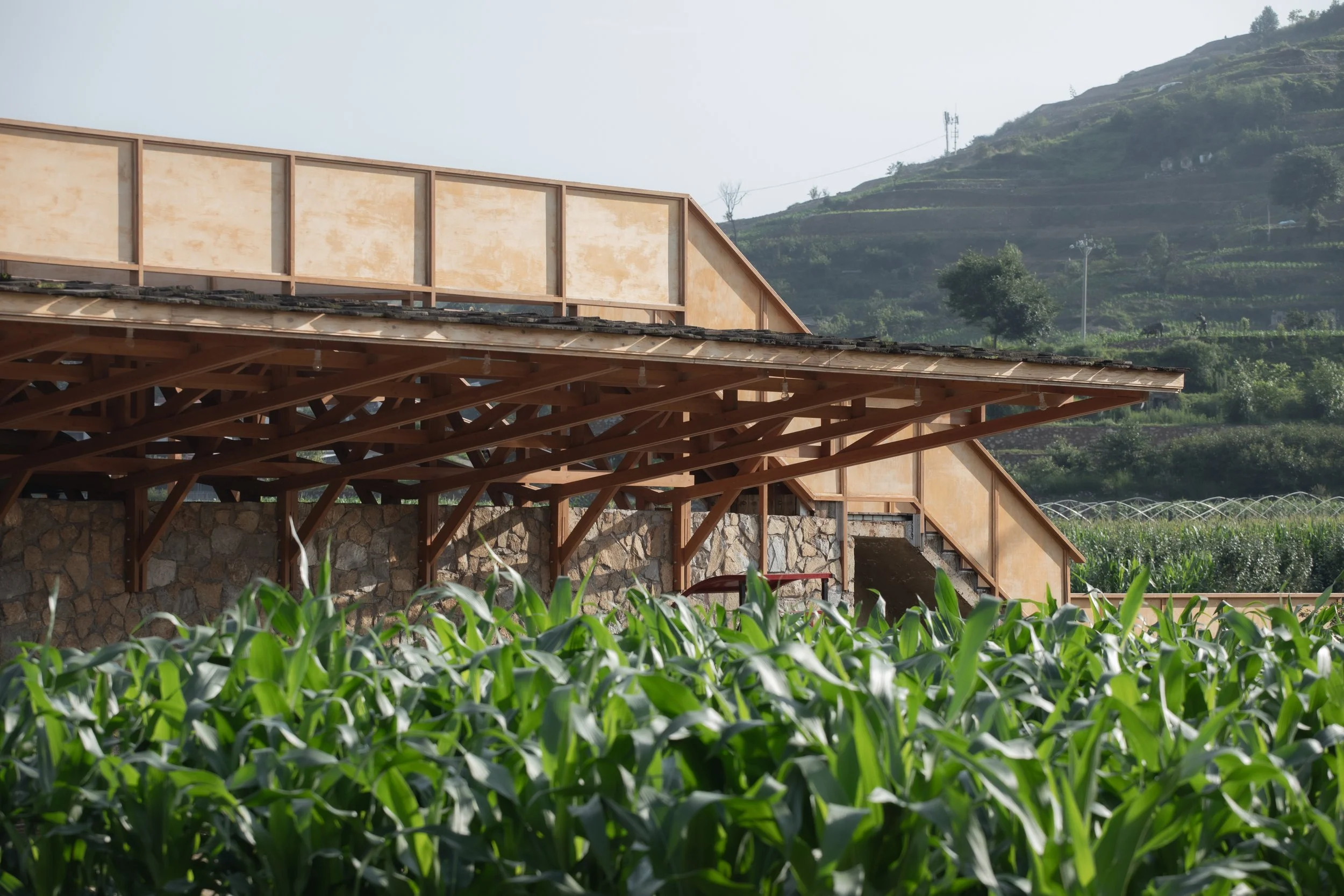
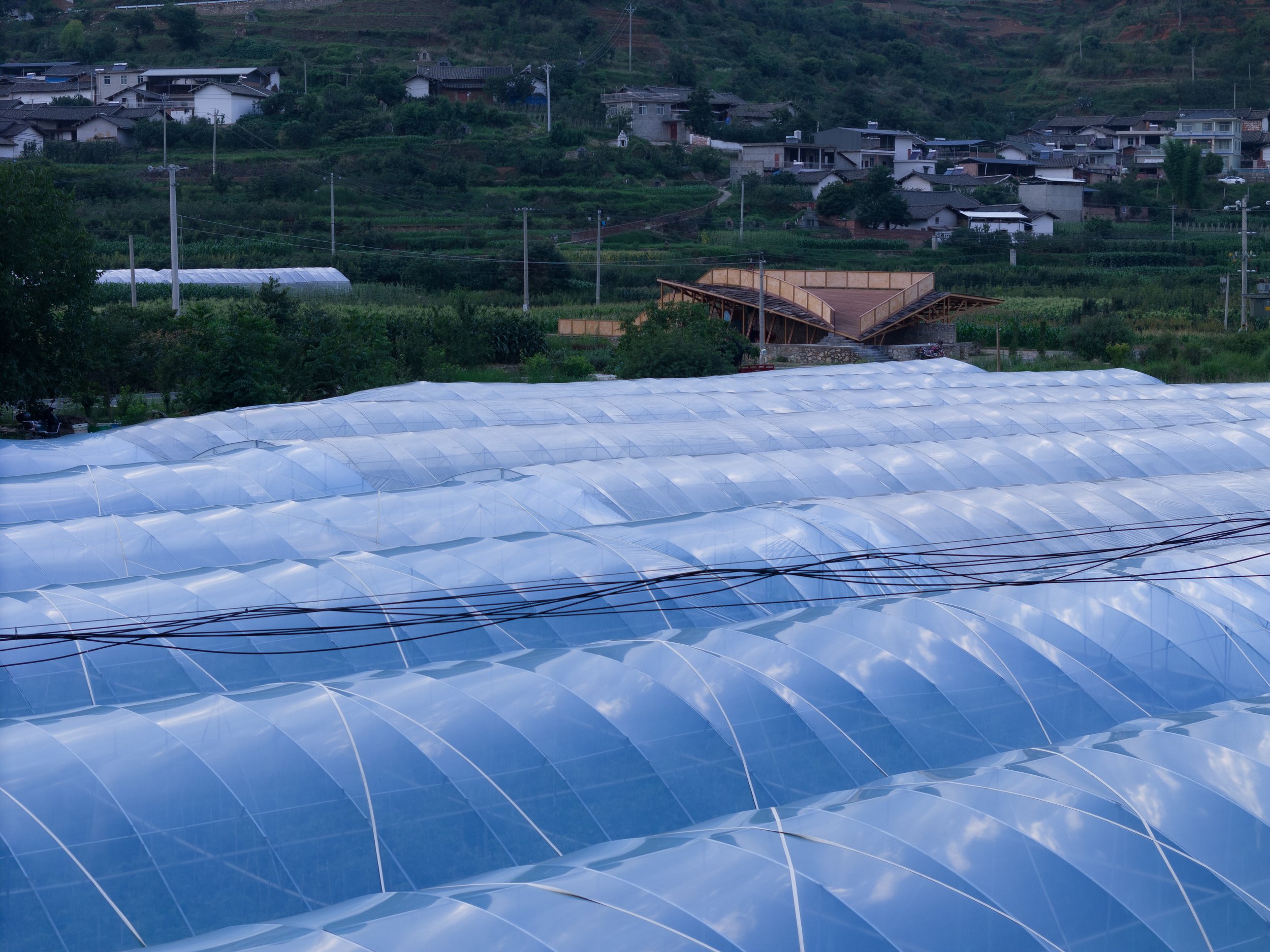
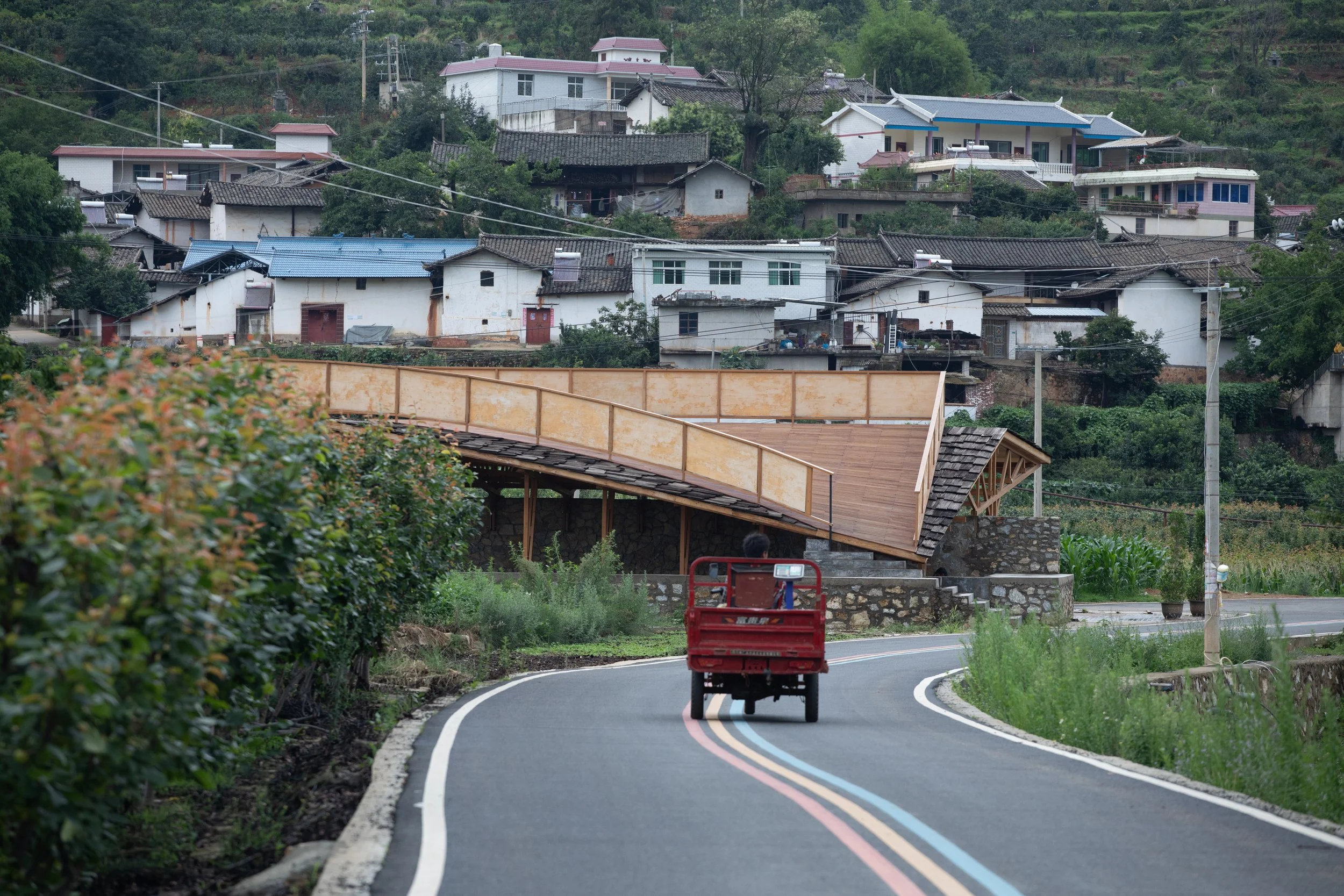
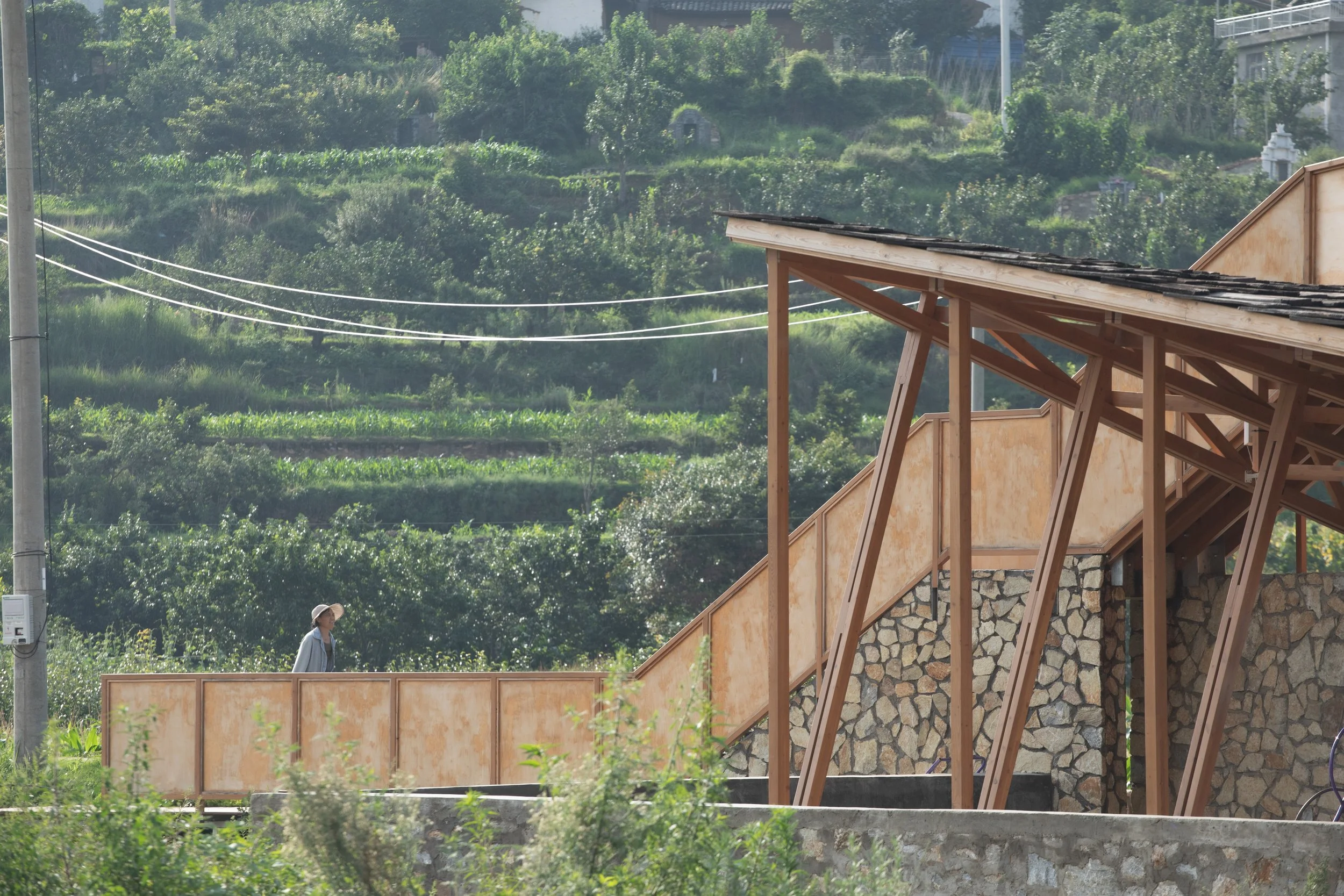
The project is located in Lianhe Village, Panzhihua, on a site overlooking cultivated fields and distant mountains. It is a transformation and partial reconstruction of a disused village committee building and a former primary school.
Like many rural areas, Lianhe Village has inevitably experienced depopulation over time. Upon arriving at the site, it feels as if time has been suspended in a previous era of rural life—the busyness of the village office and the sound of students reading still seem present. Yet the aging and poorly maintained buildings have become structurally unsafe. What remains is a fragment of time: a relic that is both physical and cultural.
Our intervention begins upon this ground of relics.
Within the broader context of rural revitalization, the site is redefined as a starting point for the local “Harmonious Village” initiative. The program consists of four public spaces—a kitchen and restaurant, a museum, an outdoor living room, and a library—corresponding respectively to the original teacher dormitory, village office, grain-drying yard, and primary school classrooms.
The design strategy emerged from a direct response to the site: to build over relics. Rather than discarding the past, we seek to extend it, even when the existing structures can no longer accommodate new uses. Usable portions of the original buildings were retained, while unsafe floor slabs were removed, leaving behind the brick-concrete wall foundations. A new timber structural system is then inserted within the voids between these existing foundations, forming an independent architectural framework.
As a result, the completed building operates through two interwoven structural orders. One is the new timber system, which supports the building and allows flexible spatial organization. The other derives from the existing brick foundations, which continue to participate in the spatial layout, serving both as a guide for functional division and as a carrier of memory. These two systems—past and present—intersect like parallel temporal layers, constructing a space where each is embedded within the other.
Beyond the main buildings, two small exposed-concrete towers are inserted into the gaps of the site: the “Handshake Tower” and the “Welcome Tower.” The Handshake Tower mediates between the new timber structure and the existing brick structure, enabling their structural connection and transition. The Welcome Tower is positioned at the edge of the site, facing the village entrance, acting both as a gesture of arrival and as the anchoring point for the tensile membrane roof of the semi-outdoor communal space.
The concrete and masonry works were carried out by local villagers using traditional construction methods, while the timber and tensile structures were prefabricated and assembled on site. In this way, traditional craftsmanship and contemporary industrial construction are once again interwoven—each embedded within the other.
Location Lianhe Village, Panzhihua, SIchuan
Area 1800㎡
Genre Public sapce