
The Lebenswelt in Mingyue Village
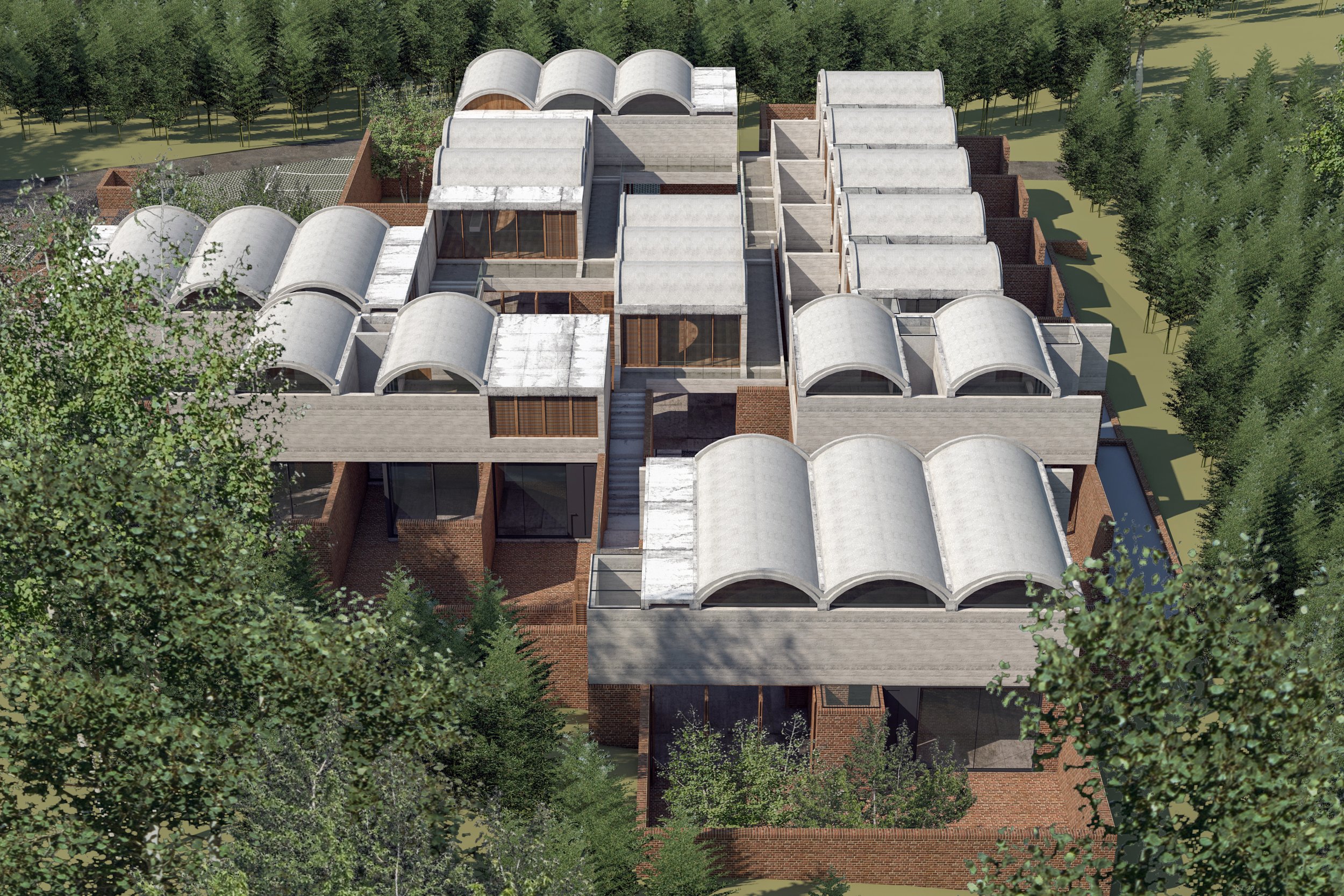
Lebenswelt, borrowing its name from Husserl’s notion of the lived world, is a genetic project for CLAB Architects. It was the first project in which structural prototype—rather than functional organization or formal intention—was explicitly established as the starting point of architectural generation. This working method was later developed further in projects such as the Xinglong Lake Children’s Art Center: architecture begins by constructing a structural order capable of standing on its own, while space, light, and use gradually unfold within it.
Located in Mingyue Village, the project accommodates dwelling, exhibition, and public educational activities. Faced with the loose scale, mixed uses, and unstable boundaries typical of a rural context, the building did not begin from a complete plan, but from the establishment of several independent structural units.
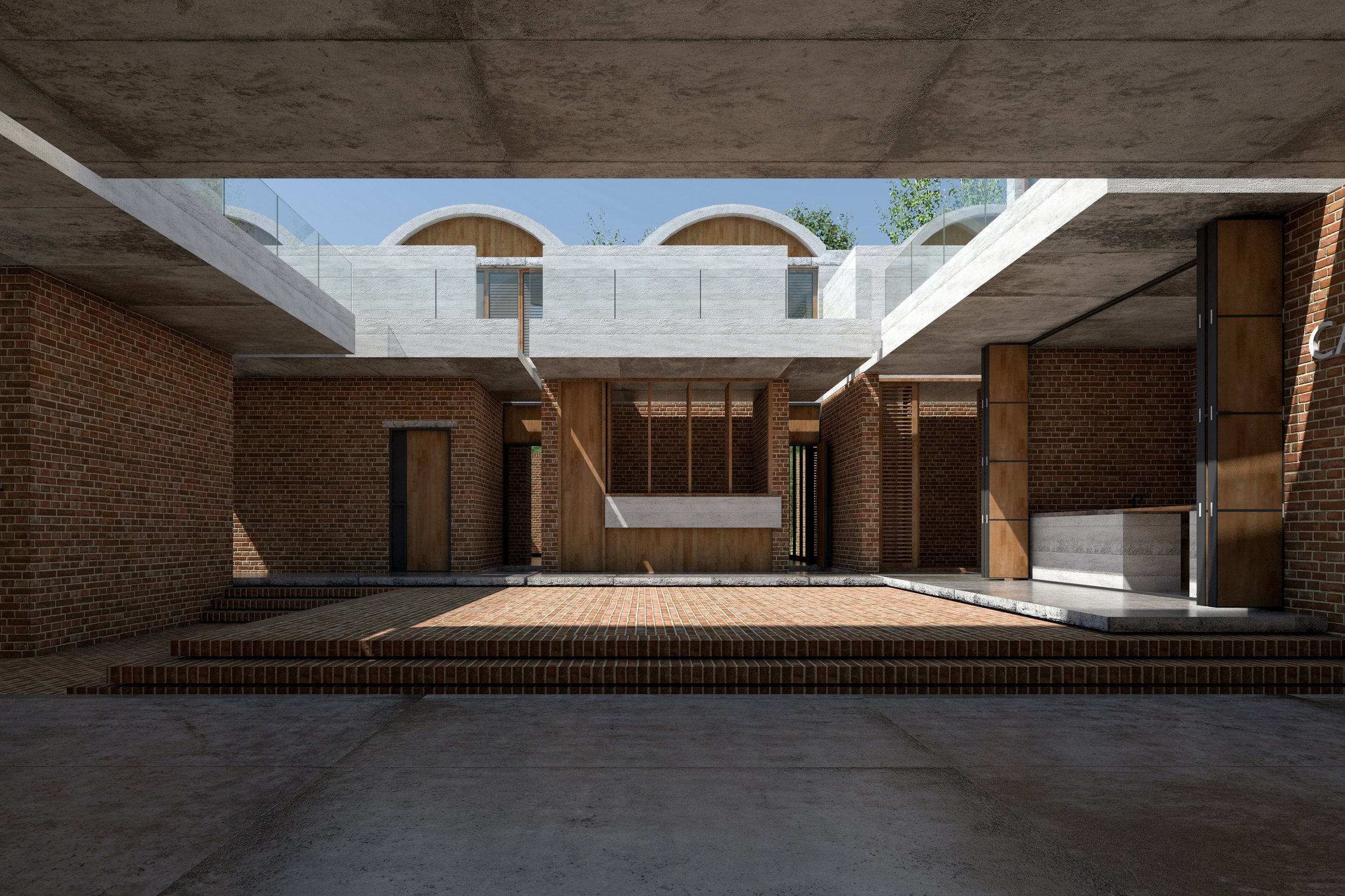
The ground floor is composed of multiple brick-built “rooms.” These brick volumes are not conventional partition walls, but enlarged load-bearing units: they accommodate coffee service, toilets, reception, and residential functions while simultaneously carrying the primary vertical and lateral loads of the building. Public space is therefore not enclosed by walls, but released between these structural bodies. Spaces with clearly defined service functions and open collective space are placed in parallel, forming a spatial relationship of coexistence rather than separation.
The upper floor is constructed across these brick structural units. All floor slabs retain complete rectangular prototypes, and the overall coverage is achieved through the juxtaposition of multiple rectangles rather than local formal adjustment. The gaps naturally left between these rectangles reveal the joints of structural assembly and simultaneously allow light to enter the ground floor. Light is not introduced as an added spatial effect, but emerges directly from the relationships between structural prototypes.
In section, all beams within the slab system are turned upward, allowing the ground floor to remain as a continuous flat ceiling. These upturned beams, together with the perimeter walls, define the structural boundary of each upper room, forming a clear U-shaped section. The roof continues this sectional logic: vaulted coverings rest directly upon the beam-walls on both sides, not as an added formal gesture, but as a further development of the structural sequence in section.
From brick structural bodies, rectangular slabs, and upturned beam-walls to vaulted roofs, the building’s form is not predetermined, but gradually generated through a continuous sequence of structural decisions. Openings are inserted into this structural framework only as climatic boundaries, and their positions may shift according to use without altering the structural order itself.
If Lebenswelt established an architectural process beginning from the juxtaposition of multiple structural prototypes, this method was later developed in the Xinglong Lake Children’s Art Center into a more unified operation in which a single prototype governs the overall spatial order. Lebenswelt is therefore not only a building, but the first full manifestation of structural thinking within CLAB’s practice.
Location Mingyue Village, Chengdu city, Sichuan Province
Area 1530㎡
Genre Hotel (unbuilt)