
Christian Boltanski The heart Pavilion
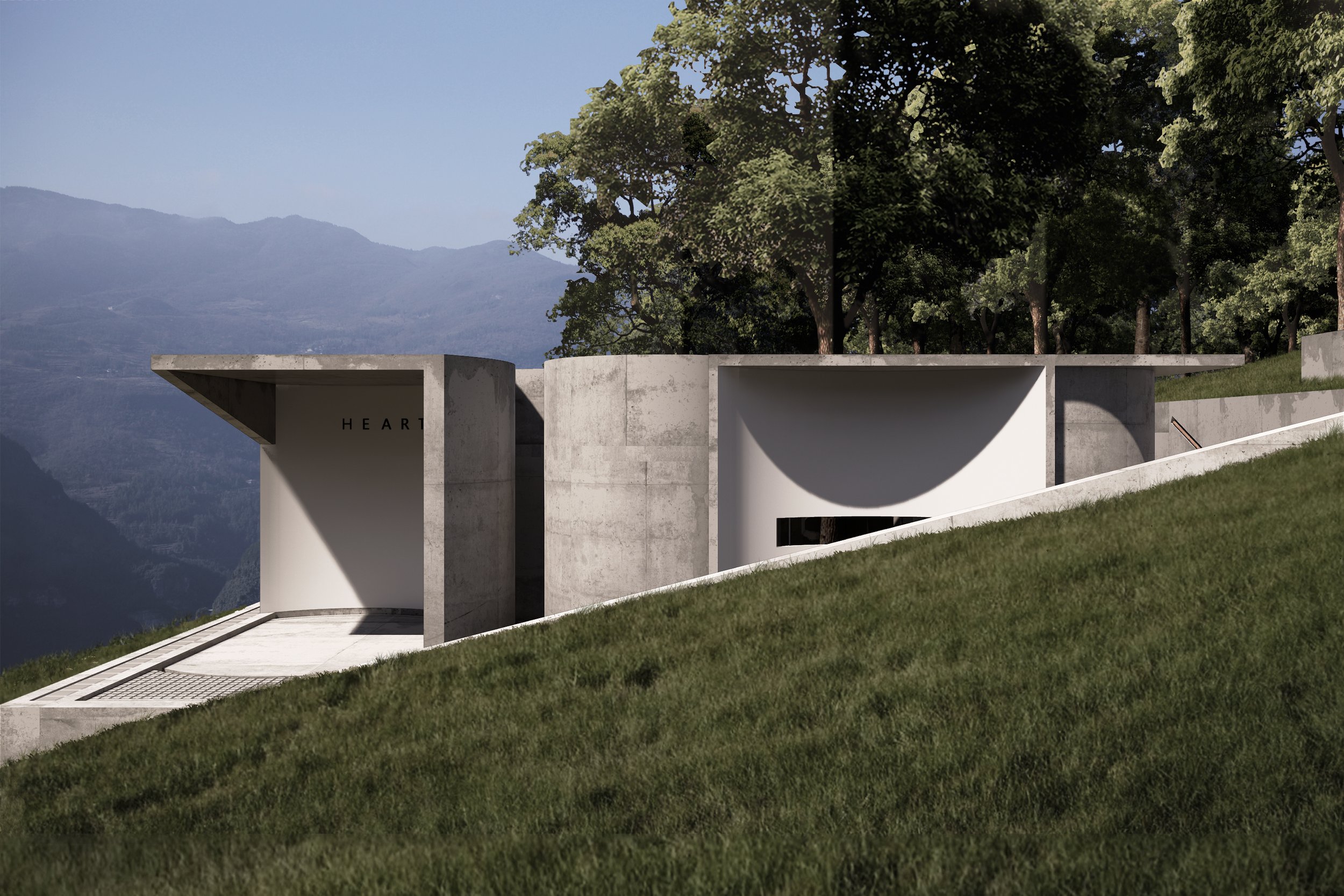
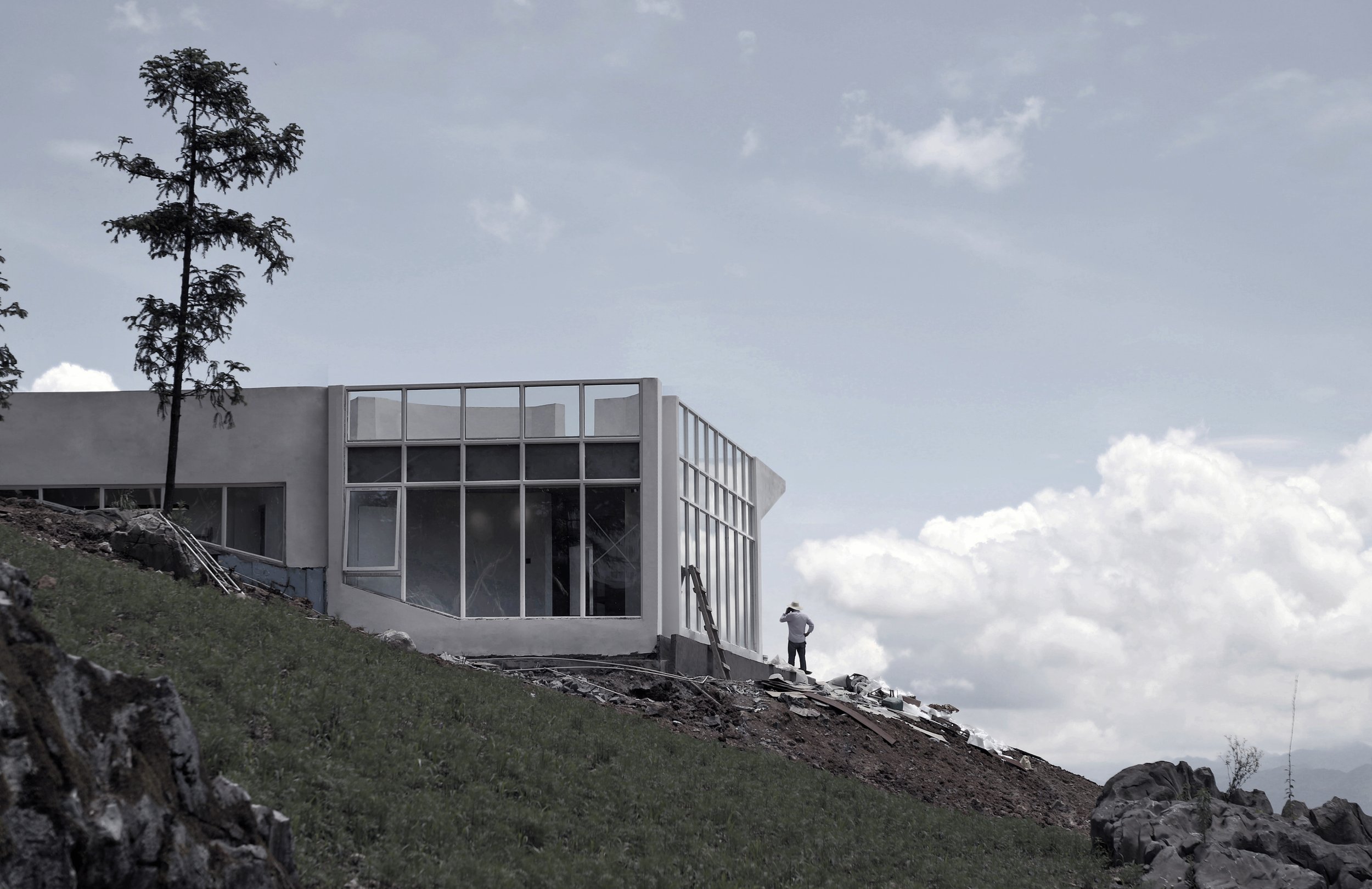
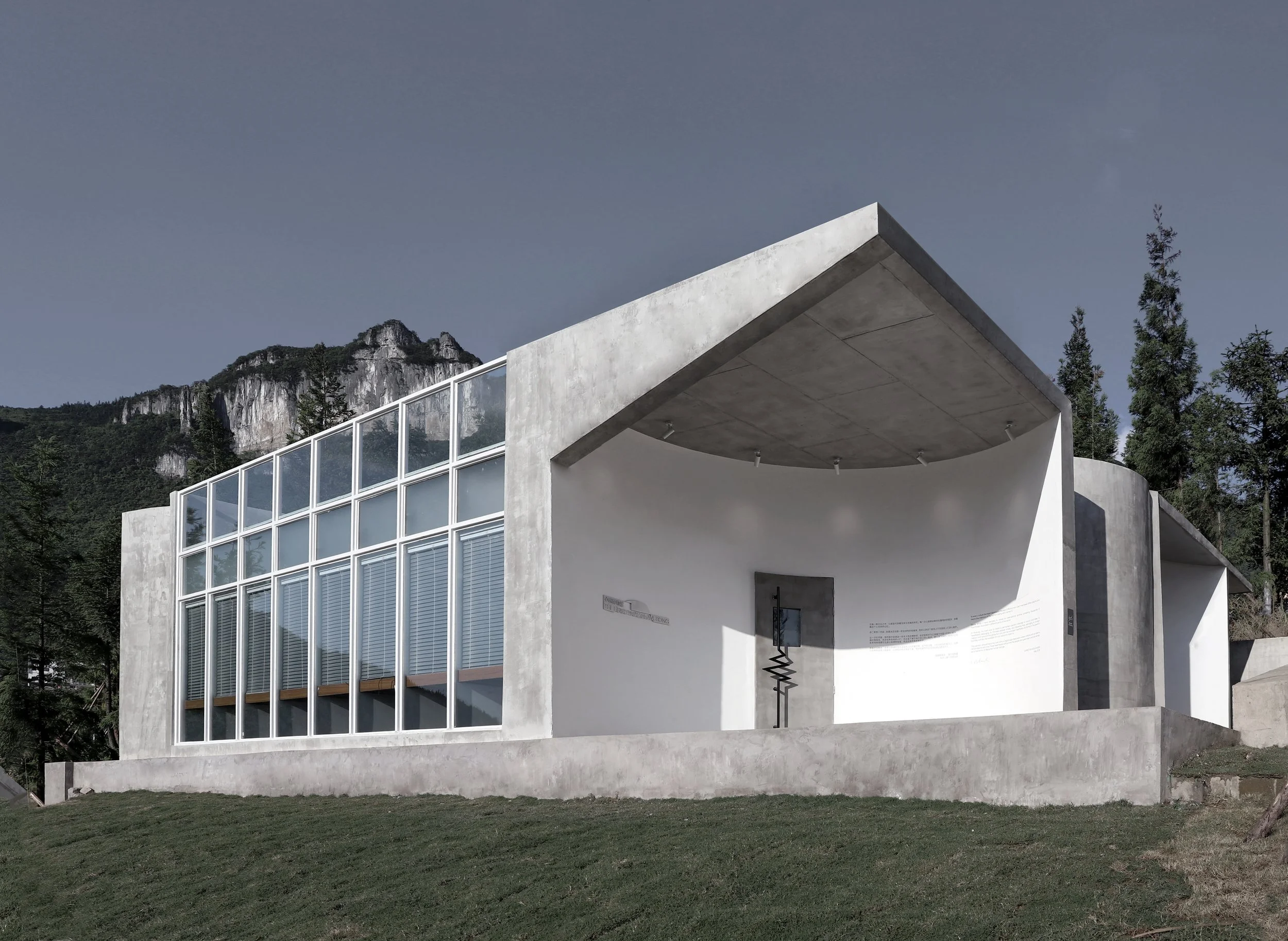
The Heart Pavilion was commissioned by Lab Art Museum for an installation by Christian Boltanski. Located on the wooded slopes of Fairy Mountain in Chongqing, the project is conceived as a hidden architecture—one that is discovered through sound rather than sight.
The building is embedded into the mountainside, almost entirely concealed within the terrain. Visitors approach it through a winding forest path, where synchronized heartbeat sounds gradually emerge from the surroundings. The journey becomes an auditory experience, preparing the body before the space is revealed.
The design is guided by three intuitions. First, the building should be perceived through hearing rather than vision. Second, its spatial form derives from an imagined image of ripples in time and space generated by a heartbeat. Third, concrete is chosen as the primary material—its mass and gravity echoing a descent into the ground, resonating with the artist’s reflections on memory and mortality.
The plan is composed of a series of overlapping circular rooms, forming a continuous sequence. This configuration not only reflects the metaphor of expanding ripples, but also organizes a clear spatial progression, alternating between light and darkness while guiding visitors through a closed loop.
At the center of the pavilion lies the “heart chamber,” the core of the installation. A stroboscopic light is suspended above, while the surrounding walls are assembled from black mirrored acrylic panels. Unlike the rectilinear chamber in the original archive on Teshima, the circular geometry creates a centrifugal spatial condition in which all reflections converge toward the center.
Standing at this point, visitors are immersed in a field of infinite reflections. Their own images multiply across the mirrored surfaces, pulsating in rhythm with the recorded heartbeats and flashing light. The experience dissolves the boundary between the individual and the collective, between presence and absence.
The Heart Pavilion is not a conventional museum. It is a spatial device that translates an invisible phenomenon—the rhythm of life—into a physical and perceptual experience. Hidden within the landscape, it invites visitors to encounter not only sound, but also themselves.
Location Chongqiong city, China
Area 195㎡
Genre museum